Art collecting
How to Hang a Painting: A Guide for Small Original Art
How to hang a painting with the right height, spacing, hardware, and placement for a small original work.
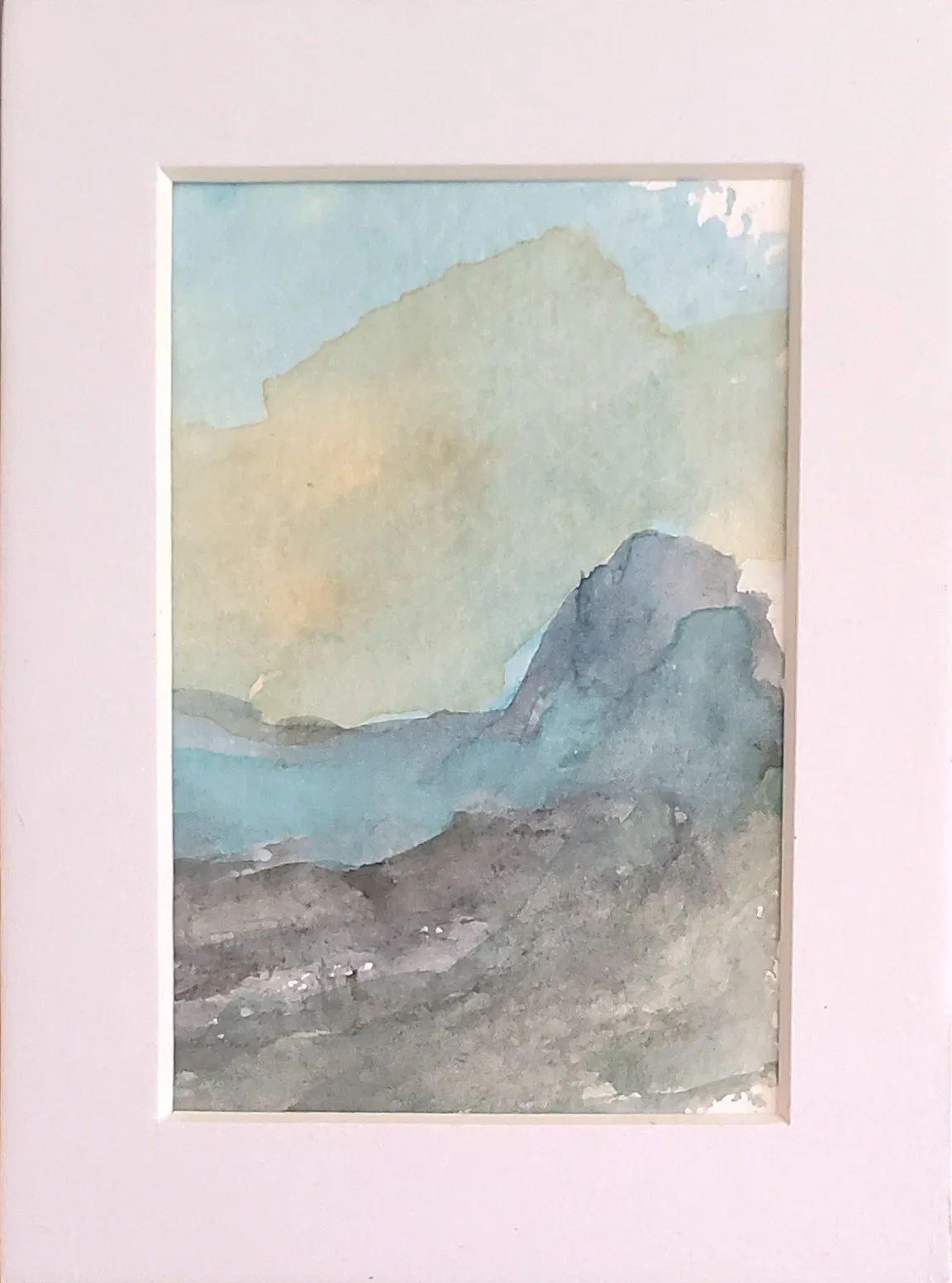
Hanging a painting is a small practical task, but it changes how the work enters your daily life. The right place gives a painting room to be noticed. The right hardware keeps it stable. The right height makes it feel connected to the people and furniture around it rather than stranded on a blank wall.
There is no perfect formula for every room. A compact original beside a reading chair needs a different decision from a large work above a console. The useful approach is to look at the real wall, the frame, and the way you move through the space. With a tape measure, a level, and a little patience, you can hang a small painting in a way that feels settled instead of merely finished.
1. Start with the place where you will actually notice it
Before reaching for a hook, decide what role the painting will have in the room. Small originals are especially good at creating a close-up pause: above a desk, beside a favorite chair, at the end of a hallway, near a bedside table, or on the wall you see first when you come through a door. These are not second-best locations. They are places where the scale invites a closer look.
Stand in the room for a minute and notice your natural sightlines. Where do you pause? Which walls are visible from the chair, the doorway, or the table where you spend time? A painting should not need to compete with the room's largest piece of furniture to earn attention. It can work beautifully in the smaller places that already ask you to slow down.
If the work is part of a group, decide what will hold that group together before measuring. It might be a shared subject, related colors, similar frame finishes, or a simple consistent gap. The guide to displaying small paintings can help you plan a grouped arrangement before you make extra holes in the wall.
2. Find a comfortable viewing height, then adjust for the room
A useful starting point is to place the visual center of the painting near your natural eye line when you are standing. That gives the work a direct relationship with the person looking at it. It is a starting point, not a law. Rooms with low ceilings, tall furniture, a staircase, or a group of pictures can all call for a small adjustment.
For a painting above furniture, treat the piece and the furniture as one composition. The work should feel connected to the table, headboard, or cabinet below it, not float high above it. Begin with a modest gap, step back from the main viewing position, and change it if the wall still feels split into two unrelated parts. A miniature may be better slightly lower than you first expect because it benefits from being close enough to invite attention.
When you are hanging a piece in a passageway or narrow wall, judge it from the route people actually take. A work seen while walking down a hallway may need to sit at a slightly different height than one viewed from a sofa. Make the decision with the room, not a measuring tape alone.
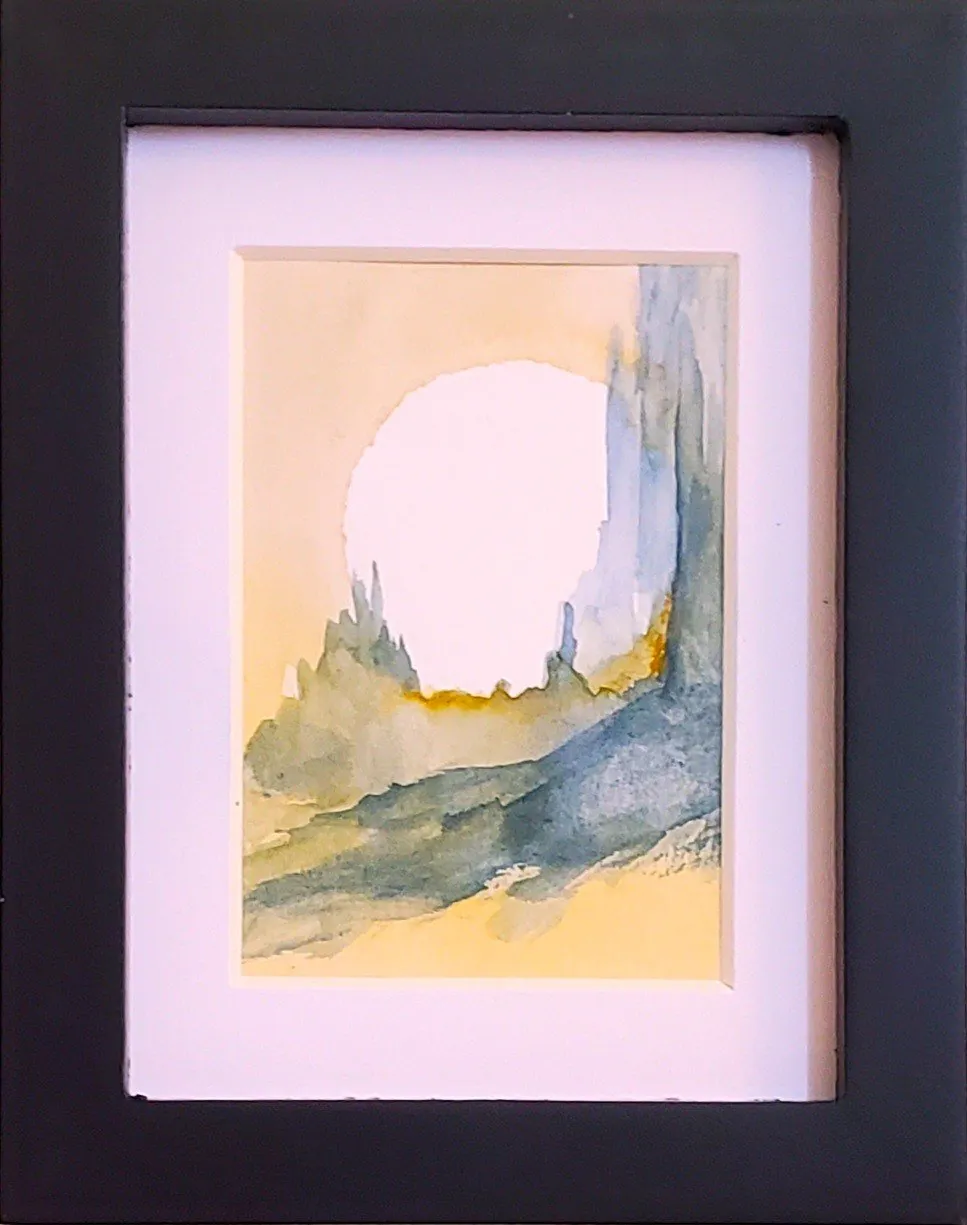
3. Measure the frame and the hanging point separately
The most common hanging mistake is measuring to the top of the frame, then discovering that the wire or D-rings sit lower than expected. Start by measuring the outside height of the frame. Then turn it over and measure the distance from the top of the frame to the point where the wire sits when pulled gently upward, or to the D-rings if the frame uses them.
That second measurement tells you where the hook needs to go. If you want the center of the painting to land at a certain height, first calculate the desired top of the frame, then subtract the distance to the hanging point. Mark the wall lightly with pencil or painter's tape. It is much easier to move a piece of tape than to correct an unnecessary hole.
Use the actual framed work for the final measurement whenever possible. A product image, a remembered size, or an estimate based on the unframed artwork can all introduce a small error that becomes obvious once the painting is on the wall. Take your time at this stage. Accurate measuring is what lets the finished placement look effortless.
4. Match the hardware to the frame and wall
Choose picture-hanging hardware based on the frame's real weight and the wall material, not the painting's visual size. A small frame may be light, but a substantial mat, glazing, or wood frame can add more weight than it appears to. Look for a hook or anchor rated above the framed weight and follow its instructions closely.
For a light framed painting on a sound drywall surface, a quality picture hook is often enough. Heavier work, uncertain plaster, masonry, or a frame that will hang in a busy location may need a more specific solution. A hardware store or professional framer can help match the fastening method to the wall, which is more useful than trying to force every frame onto the same kind of nail.
Do not rely on a decorative pushpin, a makeshift screw, or adhesive strips for an original painting unless the hardware maker explicitly rates the product for the frame and wall you have. The goal is not to make hanging complicated. It is to give the work a stable support that does not leave you worrying every time a door closes nearby.
Two hooks can be worthwhile when a frame is wide, prone to shifting, or already fitted with two D-rings. They help the frame stay level and spread the load across two points. For a small, light frame with a centered wire, one appropriate hook may be perfectly sound. Follow the frame's own hanging design where you can.
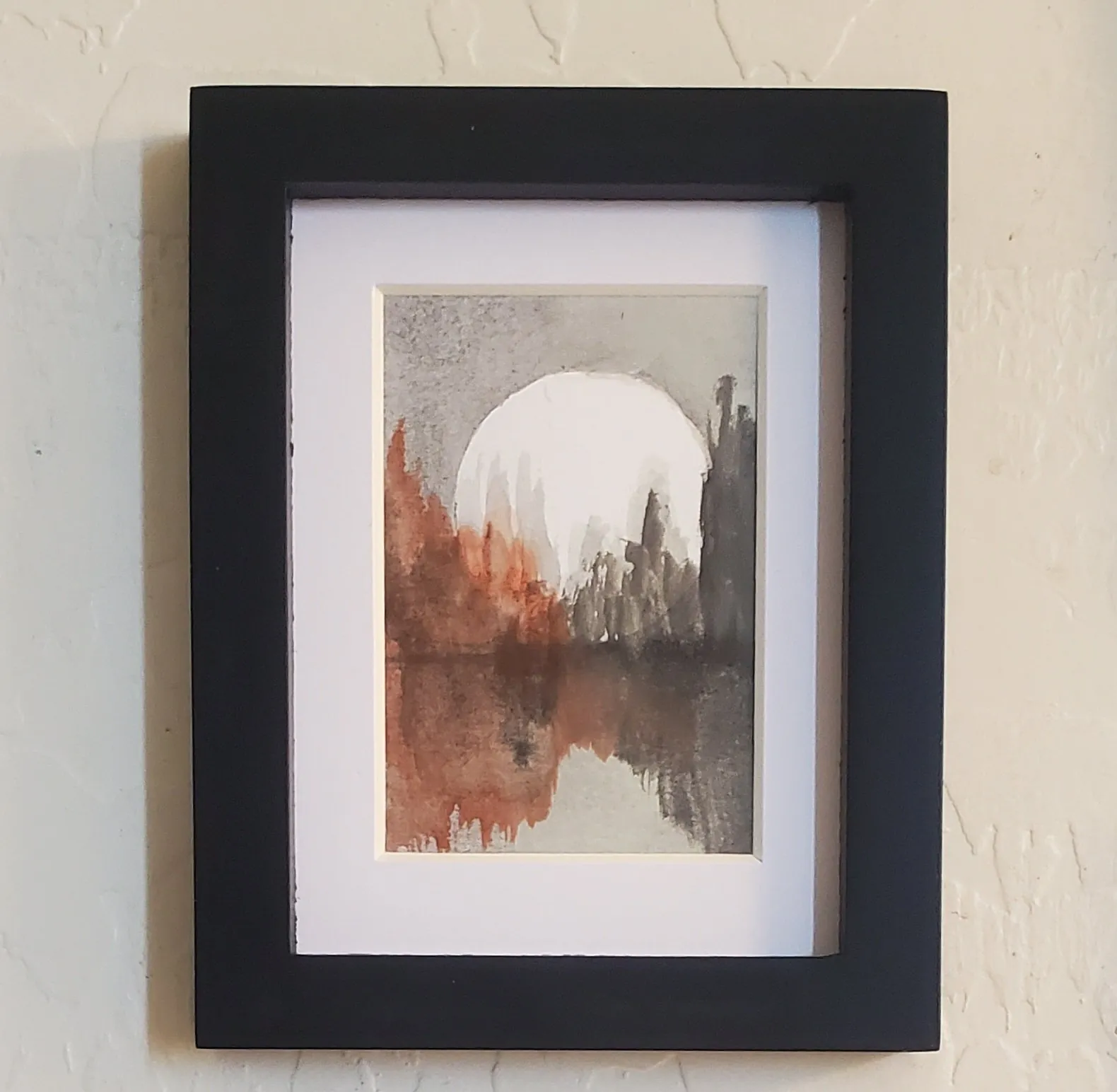
5. Use tape and a level before committing
Painter's tape is one of the simplest tools for hanging art well. Mark the top and side edges of the framed work on the wall, or make a paper outline at the finished dimensions. View it from the doorway and from the place where you normally sit. This lets you see whether the work has enough breathing room before you bring out the drill or hook.
Once you place the hook, use a level to check the frame after it is hanging. Do not assume the ceiling, furniture, or nearby trim is perfectly level. Your eye is good at noticing a slightly tilted painting, particularly when it sits near a shelf, a doorframe, or another picture. A small adjustment now saves you from seeing the tilt every time you walk into the room.
After the painting is level, take a few steps back and then come close. The far view tells you whether it belongs in the composition of the room. The close view tells you whether it is at a comfortable height to enjoy. Small work should not be so high that its surface, edges, and detail become an afterthought.
6. Keep the artwork out of harsh conditions
Where you hang a painting matters as much as how securely you hang it. Avoid walls where direct sun regularly lands on the frame, places immediately above a radiator or fireplace, and damp or steamy areas such as bathrooms and laundry rooms. The Smithsonian's collection-care guidance similarly advises protecting valued objects from strong light, heat, and changing humidity.
Take a moment to watch the wall at different times of day. A bright room can be an excellent home for art, but a narrow beam of direct afternoon sun can reach farther than you expect. Work on paper is particularly worth protecting with proper framing and appropriate glazing. The Journal's guide to protecting paintings from sunlight offers a closer look at choosing a wall that keeps the work enjoyable over time.
Door swings, chair backs, shelves that get moved, and busy entryways deserve some thought too. A painting that hangs safely in a quiet room may be vulnerable on a wall where people regularly brush past it. The best location is one that you see often without asking the frame to survive the busiest part of the house.
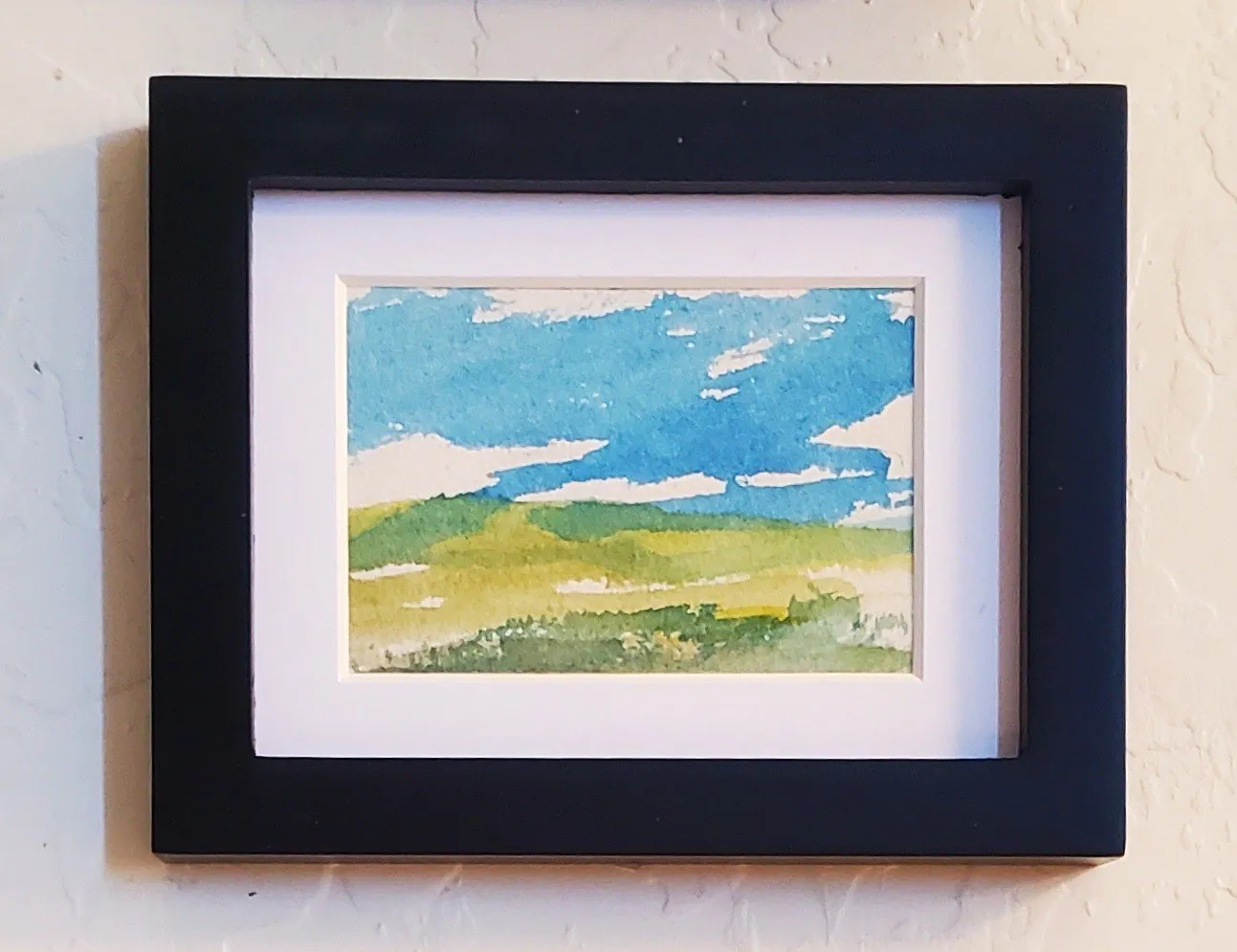
7. Let a small painting make a close-up moment
A small original does not need a huge blank wall to feel significant. Its strength is often intimacy. It can reward the walk down a hall, make a desk feel more personal, or give a quiet corner a sense of attention. Once you stop expecting the painting to fill a large space by itself, more useful places start to appear.
Try one work on its own before building a gallery wall around it. Give it a few days and notice when you look at it. If the placement feels too isolated, add a small object below it, move it closer to a natural sightline, or pair it with another piece that shares a mood or scale. The guide to choosing art for your home can help you keep the room's feeling, rather than a color-matching rule, at the center of that decision.
A painting can move. That flexibility is one of the pleasures of compact work. You may find that it belongs by a reading chair in winter, then brightens a hallway in summer. Hanging art is not a final exam. It is a practical way to keep making space for the pieces that deserve a closer look.
A simple hanging checklist
- Choose a wall you see regularly and that brings you close enough to enjoy the work.
- Check for direct sun, heat, steam, door swings, and busy furniture paths.
- Measure the outside frame and the distance from its top to the actual hanging point.
- Use hardware rated above the framed weight and suited to the wall material.
- Mark the proposed position with painter's tape before making a hole.
- Level the frame, step back from the main viewing point, and adjust before calling it done.
Once the practical part is done, the wall should disappear from the decision. What remains is the painting: a small piece of color, surface, and attention that becomes part of the way you experience the room every day.
A close look
Original work for the places you notice every day.
Fred3 Mini Art offers original miniature paintings shaped by land, water, color, and imagined space. Explore the available work, see the landscape collection, or contact Fred with a question before choosing.
Browse available workQuestions
Hanging a painting FAQ
What height should a painting be hung?
There is no single height that works in every room. Begin by placing the visual center near your natural eye line, then adjust for furniture, a grouped arrangement, and the way you see the wall from where you actually live. A small painting often belongs in a closer, more personal sightline than a large statement piece.
How do I know which picture hook to use?
Start with the framed weight and the wall material, then choose hardware rated to hold more than that weight. A small frame may need only a quality picture hook, while a heavier frame or uncertain wall surface may need an anchor or a professional installation.
Should I use one hook or two to hang a painting?
Two hooks can help a framed painting stay level and reduce shifting, especially when the frame is wider or the room sees regular movement. A small, light frame may sit securely on one suitable hook. The better choice matches the frame's hanging hardware, weight, and the wall behind it.
Can I hang a painting near a window?
Yes, if direct sunlight does not regularly strike the artwork. Check the wall at different times of day, then use a shade, curtain, or another placement if a strong beam reaches the painting. Work on paper also benefits from protective framing and UV-filtered glazing in a bright room.
Keep reading
Related posts
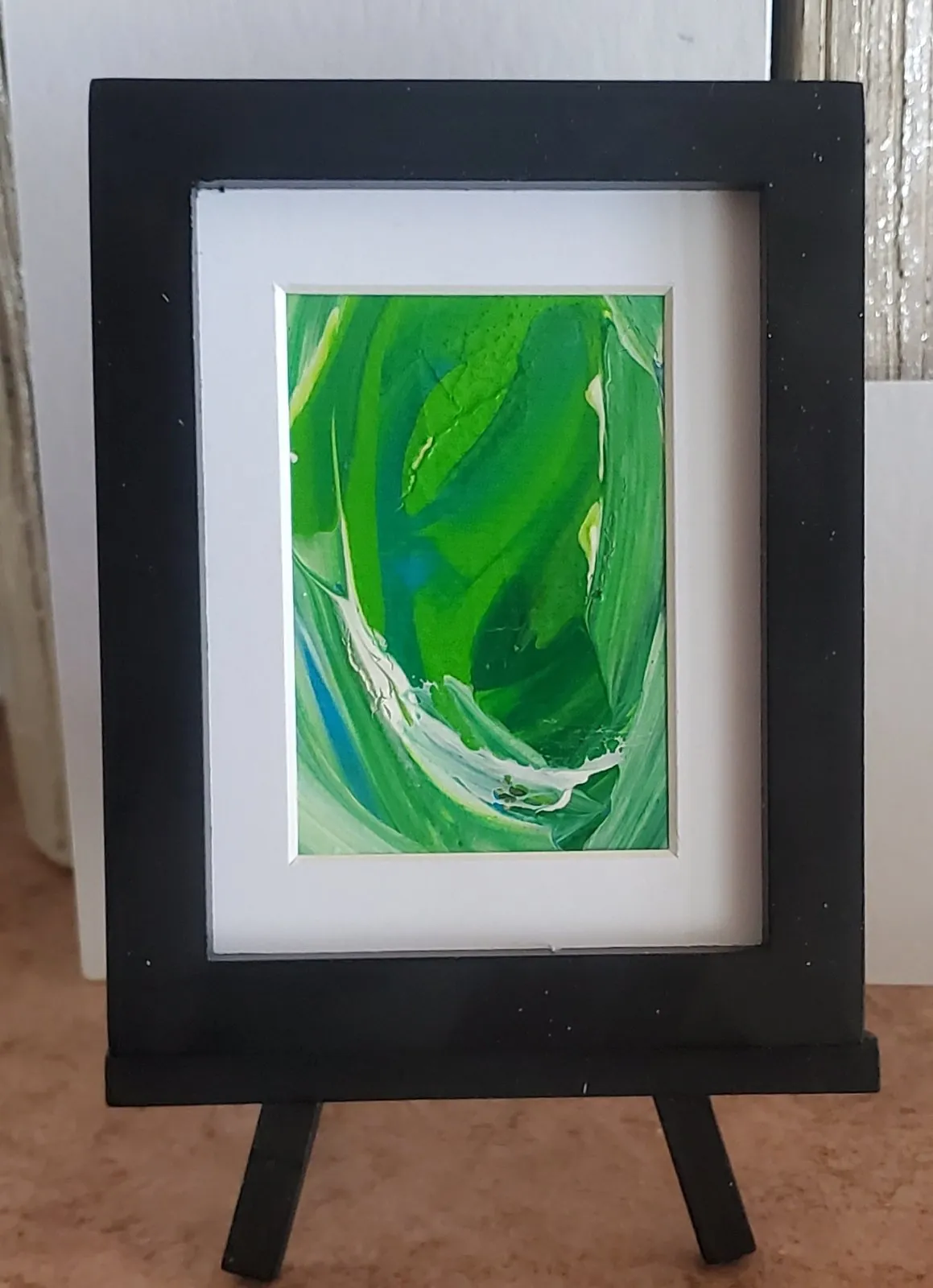
Art Collecting
How to Display Small Paintings: 7 Ideas That Work
Seven practical ways to place small paintings with confidence, from a single close-up moment to a more collected grouping.
Read the guide ↗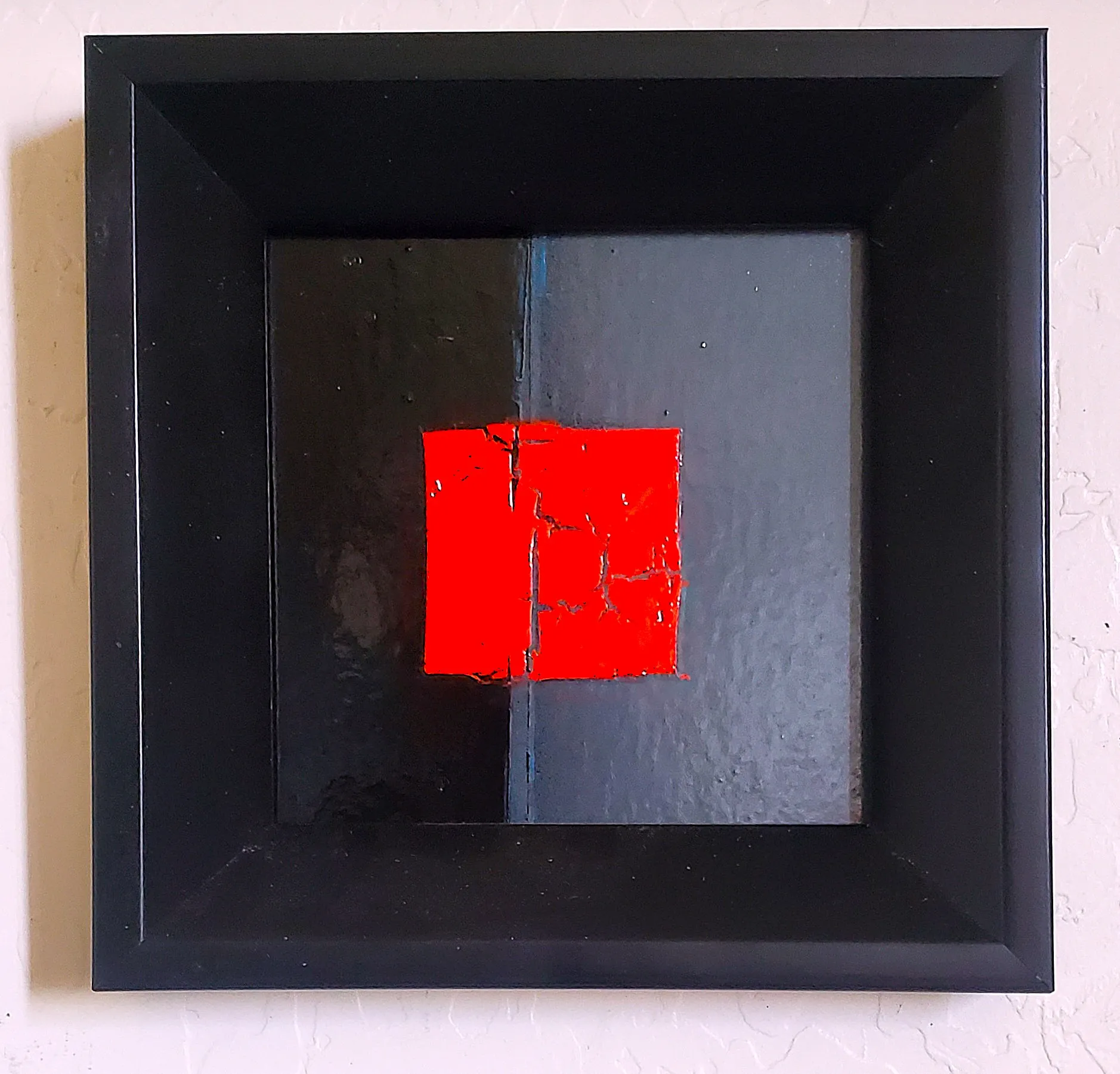
Art Collecting
How to Choose Art for Your Home
A practical way to choose art that feels personal, works with your space, and keeps rewarding a closer look.
Read the guide ↗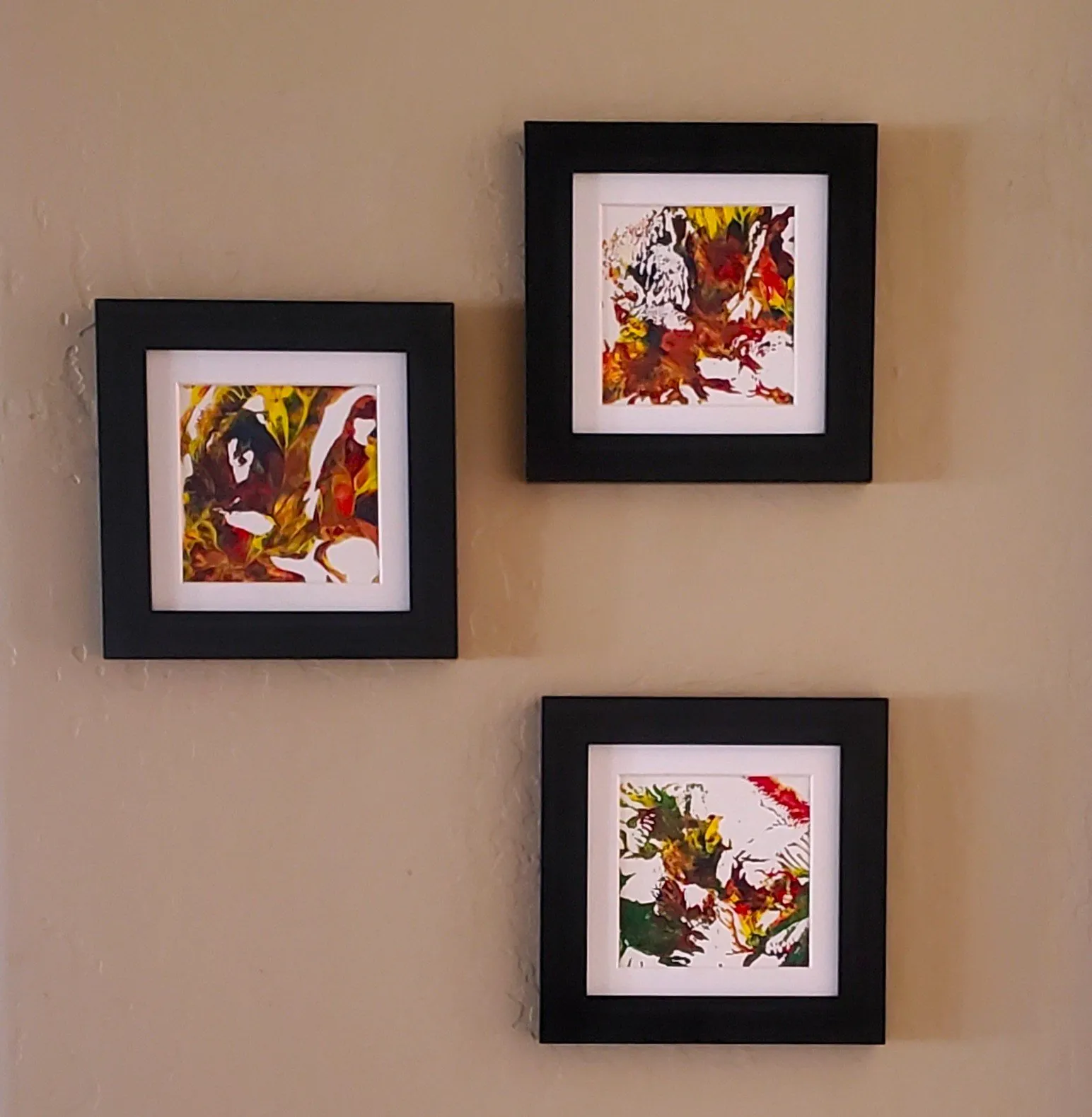
Art Collecting
How to Frame a Painting: A Guide for Small Original Art
A practical guide to choosing a frame, mat, glazing, and hanging plan that lets a small original painting hold its place at home.
Read the guide ↗