Art collecting
How to Care for Watercolor Paintings at Home
How to care for watercolor paintings at home, with practical advice on light, framing, cleaning, handling, and safe storage.

A watercolor painting can feel especially alive at home. Transparent color, the texture of paper, and a visible touch of the artist’s hand all reward a closer look. That delicacy is part of the pleasure, but it also means the work deserves a little more thought than a poster or a hardier painted surface.
Good care is not complicated or fussy. It is mostly a matter of preventing a few ordinary problems before they happen: direct sun, moisture, rough handling, a poor frame, and enthusiastic cleaning. Give the painting a stable place, keep its surface protected, and know when a change needs professional advice. Those habits let you enjoy an original watercolor rather than treating it like something too fragile to live with.
Why watercolor needs a different kind of care
Most watercolors are painted on paper. The pigment is held within or near the fibers rather than sitting beneath a heavy protective varnish. That is why a luminous wash can look so open and immediate, and why watercolors are more vulnerable to light, moisture, rubbing, and marks from an unplanned touch. Paper can crease or stain, while thin layers of color can fade or change when exposed to harsh conditions for a long time.
The Canadian Conservation Institute includes watercolor paintings among works on paper and notes that handling, light, and unstable humidity are everyday causes of damage. Its practical advice is reassuring: avoid unnecessary handling, keep the work out of direct sunlight, and choose a stable interior environment. You do not need to recreate museum storage in your home. You do need to notice the wall, window, and frame the work will actually live with.
A framed watercolor can be part of daily life. Hang it in the room where you will see it, let it become familiar, and make a few simple decisions that keep accidental stress off the paper. The goal is care that supports enjoyment, not care that turns a painting into a permanent boxed object.
1. Start with the frame, not the wall
For most original watercolors, the frame is the first layer of protection. A well-made frame normally places glazing in front of the work and uses a mat or spacer to keep the paper from touching that glazing. The separation matters. It prevents the surface from sticking to glass or acrylic if conditions change and gives the artwork a little breathing room inside its frame.
When you are buying a watercolor or having one framed, ask what materials will sit directly around it. A professional framer can help choose acid-free mat and backing materials, suitable hinges or mounting, and glazing that fits the work and its intended room. Those choices are not merely decorative. They reduce the risk that surrounding materials, dust, or casual contact will become part of the painting’s story.
UV-filtering glazing can be a worthwhile addition in a bright home, especially for works on paper. It is a layer of help, not permission to place a watercolor where strong sun hits it every afternoon. Think of it as you would a good umbrella: useful protection when you are already making sensible choices about the weather.

2. Keep direct sunlight off the painting
Light makes art visible, but repeated direct sunlight can fade colors and discolor paper. The Canadian Conservation Institute’s guidance for works on paper is clear that light damage cannot be reversed. The useful distinction is between a room that is bright and a beam of direct sun that repeatedly lands on the artwork. A watercolor can live beautifully in a daylight-filled room when the harshest path of the sun misses the frame.
Before you commit to a wall, watch it at more than one time of day. Morning and afternoon sun travel differently, and a wall that looks shaded when you first look may receive a bright rectangle later. A simple paper test works well: tape a sheet of paper roughly where the frame will sit, then check it while the room is brightest. If it receives direct sun, choose a nearby wall or add a curtain, blind, or shade that you will actually use.
Keep the work away from heat sources too. A radiator, fireplace, vent, kitchen steam, or an exterior wall that feels damp or cold can create conditions the paper and frame do not need. The Journal’s guide to protecting paintings from sunlight covers more practical ways to read the light in your own room.
3. Give the painting a steady, ordinary room
Watercolor does not need a climate-controlled gallery, but it does better where people are comfortable year-round. A living room, bedroom, study, or interior hallway is usually a safer choice than an attic, garage, basement, shed, or bathroom. Places that swing between heat and cold, or collect dampness and steam, can stress paper and create trouble inside a frame over time.
Look at the practical risks around the wall as well. Avoid spots below pipes, beside a shower wall, or near a door where the frame will be knocked repeatedly. A narrow passage can still work for a small painting when there is enough clearance for people and bags to pass without brushing it. The best place is not always the largest empty wall. For a miniature watercolor, a close-up place near a chair, desk, shelf, or reading lamp can make the work feel intentional and safe.
Once the painting is hanging, check it occasionally without turning care into a ritual. Look for condensation inside the glazing, a new stain, an insect, a loose frame corner, or a shifting hook. A quick calm look when you dust the room is enough. If you see a real change, take a photo and pause before trying a home repair.

4. Handle the frame, not the paper
Handling is one of the most common ways a work on paper is accidentally damaged. The safest habit is simple: handle the watercolor as little as possible, and when you do move it, hold the frame securely with clean, dry hands. Plan where it will rest before lifting it. Clear a stable surface, move slowly, and keep rings, watches, drinks, and cleaning supplies out of the way.
Never press on the front of the glazing or the backboard to test the frame. Do not lift a framed watercolor by its hanging wire. If it is unframed, loose, curled, torn, damp, or otherwise fragile, do not improvise with tape or a kitchen-table flattening project. The Canadian Conservation Institute recommends supporting works on paper from beneath with a stiff board when they must be moved. A paper conservator or experienced framer can advise on a special piece before a move or reframing.
For a house move, renovation, or temporary change of walls, use the same caution. Protect the frame from rubbing, keep it away from rain and damp cardboard, and store it in a clean interior room rather than a garage or basement. The Journal’s painting-storage guide explains how to create a low-risk resting place when a work needs to be off the wall.
5. Clean the surroundings, not the artwork
Most framed watercolors need very little cleaning. Dust the outer frame gently with a clean, soft, dry cloth. If the glazing has fingerprints or marks, clean only the outside surface. Apply a small amount of glass cleaner to a cloth well away from the frame and artwork, then wipe the glass or acrylic carefully. Do not spray toward the frame, because liquid can run into the edges where the paper and mat sit behind it.
Do not use water, household cleaner, a damp cloth, erasers, or a brush on the watercolor itself. Do not take it out of its frame because a speck of dust is bothering you. Paper fibers and watercolor pigment can react unpredictably to moisture or friction, and a quick home fix can become a permanent mark. The Canadian Conservation Institute cautions that cleaning methods and water-based solutions can harm paintings when the materials are not fully understood.
If you notice brown spotting, mold, water marks, rippling paper, insect damage, a tear, loose flakes, or fogging inside the frame, treat the work as a small conservation question rather than a cleaning project. Keep it dry, away from direct light, and seek a conservator’s advice. A professional can identify the cause before treatment makes the problem harder to reverse.
6. Choose a placement that lets a small watercolor matter
A miniature watercolor does not need to fill a big wall alone. Its scale is an invitation to approach. Try a narrow wall beside a bookshelf, the space above a small table, a reading corner, a desk, or a quiet place along a hall. These locations let a viewer see the edges of the paper, the soft layers of color, and the details that are easy to miss from across a room.
Use the framed dimensions, not just the image size, when you decide where it will go. Tape a paper outline to the wall, step back from the doorway and the place where you normally sit, then adjust before making holes. If you are arranging several small works, give them a shared outer shape and even gaps so each piece has room to breathe. The guide to displaying small paintings offers several ways to make an intimate work feel at home rather than lost.
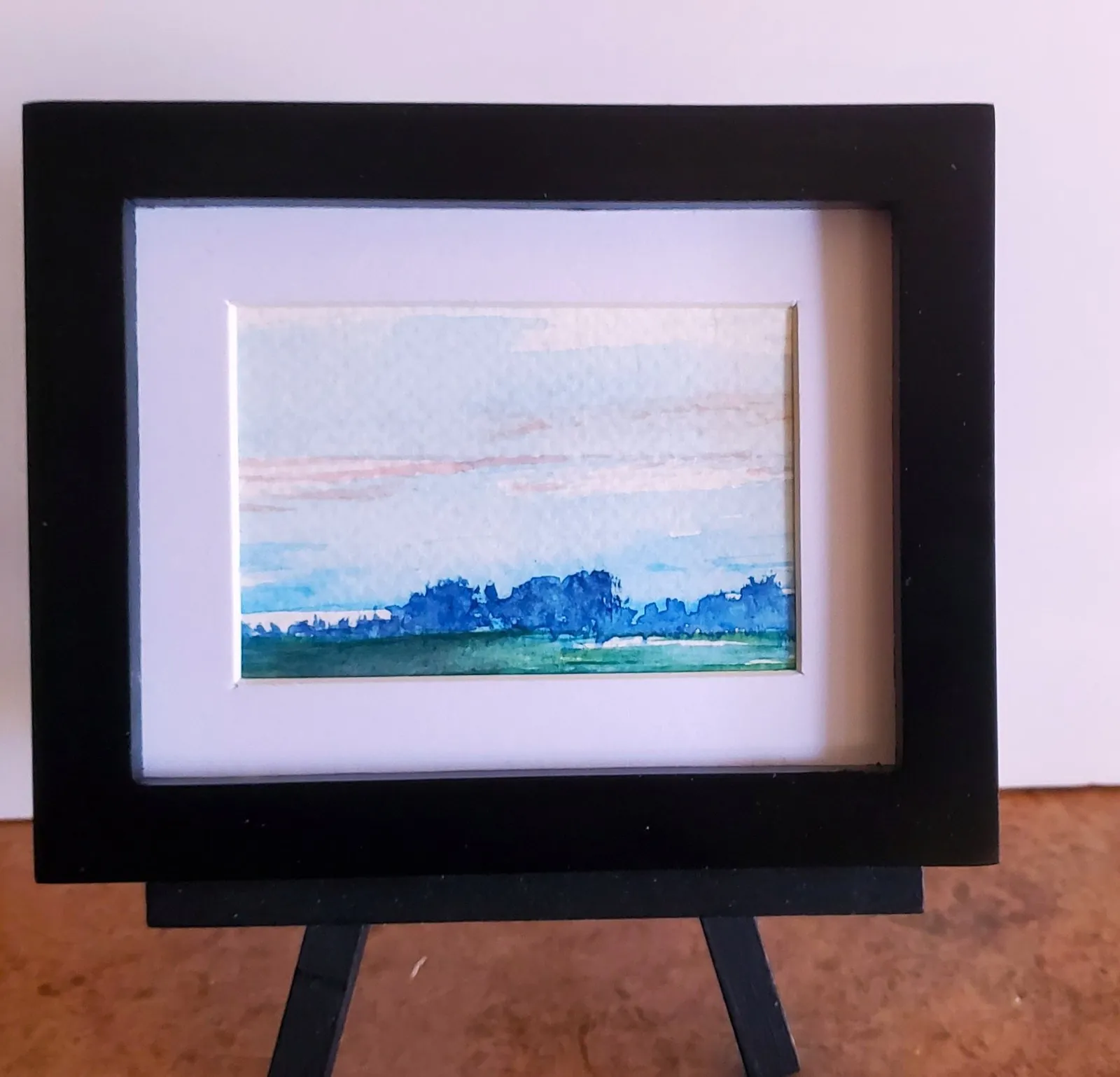
A simple watercolor-care checklist
- Frame original watercolors with appropriate glazing and a mat or spacer so the paper does not touch the front surface.
- Keep direct sunlight off the painting, even when the room itself is bright.
- Choose a clean, dry, stable interior room away from steam, heat, dampness, and busy contact points.
- Handle the frame with clean, dry hands and move it only when you have a clear resting place ready.
- Dust the frame lightly and clean only the outside glazing, with liquid kept away from the edges.
- Ask a qualified conservator about mold, water damage, stains, tears, rippling, loose material, or any change inside the frame.
A close look
Watercolor made for a quieter corner.
Fred3 Mini Art includes original miniature watercolors shaped by changing light, landscape, and stillness. Explore the watercolor collection, browse the available work, or contact Fred before choosing a piece for your home.
Explore watercolorsQuestions
Watercolor-care FAQ
Should watercolors be framed behind glass?
Usually, yes. Framing a watercolor behind glazing helps protect the paper and painted surface from dust, accidental contact, and everyday handling. Ask a professional framer to use appropriate materials and a mat or spacer so the artwork does not touch the glazing.
Can a watercolor painting hang in a sunny room?
Yes, provided direct sunlight does not repeatedly strike it. Choose a wall beside rather than opposite a bright window, observe where sun travels during the day, and use curtains or shades when needed. Protective glazing is helpful, but it does not make direct sun safe.
How do I clean a framed watercolor painting?
Dust the frame gently with a soft, dry cloth. If the outside of the glass needs cleaning, apply a small amount of cleaner to the cloth away from the artwork, then wipe the glazing only. Never spray near the frame or let liquid run into its edges.
What should I do if a watercolor has mold, brown spots, or water damage?
Do not try to wash, flatten, tape, or treat it at home. Keep the work dry and away from direct light, then contact a paper or paintings conservator for advice. Paper and watercolor can be permanently changed by well-meant home treatments.
Keep reading
Related posts
Art Collecting
How to Protect Paintings From Sunlight
A practical guide to placing and caring for paintings so light remains part of the pleasure, not a source of avoidable damage.
Read the guide ↗
Art Collecting
How to Frame a Painting: A Guide for Small Original Art
Learn how to frame a painting, from choosing a frame and mat to protecting original art with the right glazing and hanging plan.
Read the guide ↗Art Collecting
How to Store Paintings Safely at Home
How to store paintings safely at home, with practical guidance on handling, wrapping, placement, and when to call a conservator.
Read the guide ↗