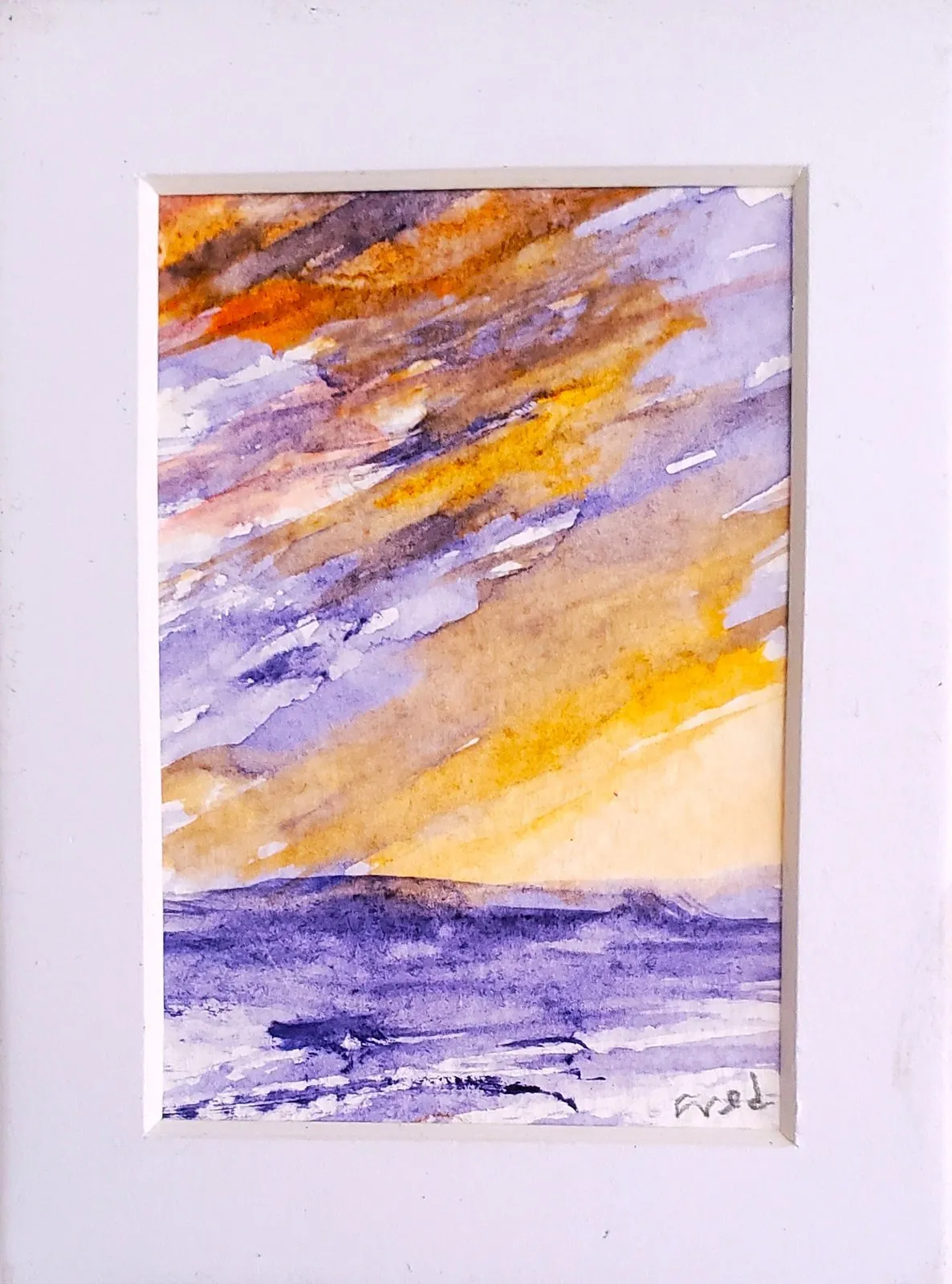
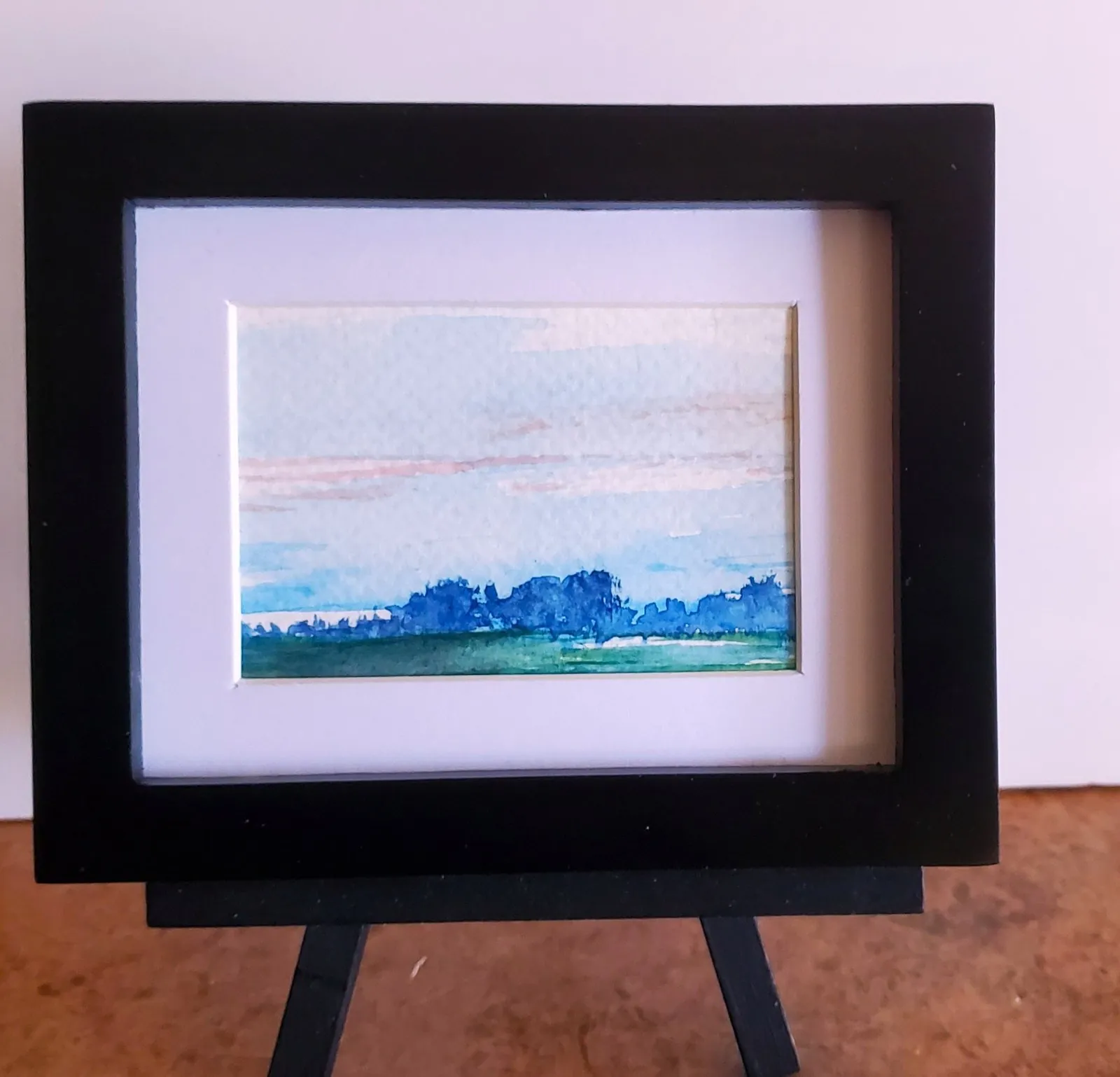
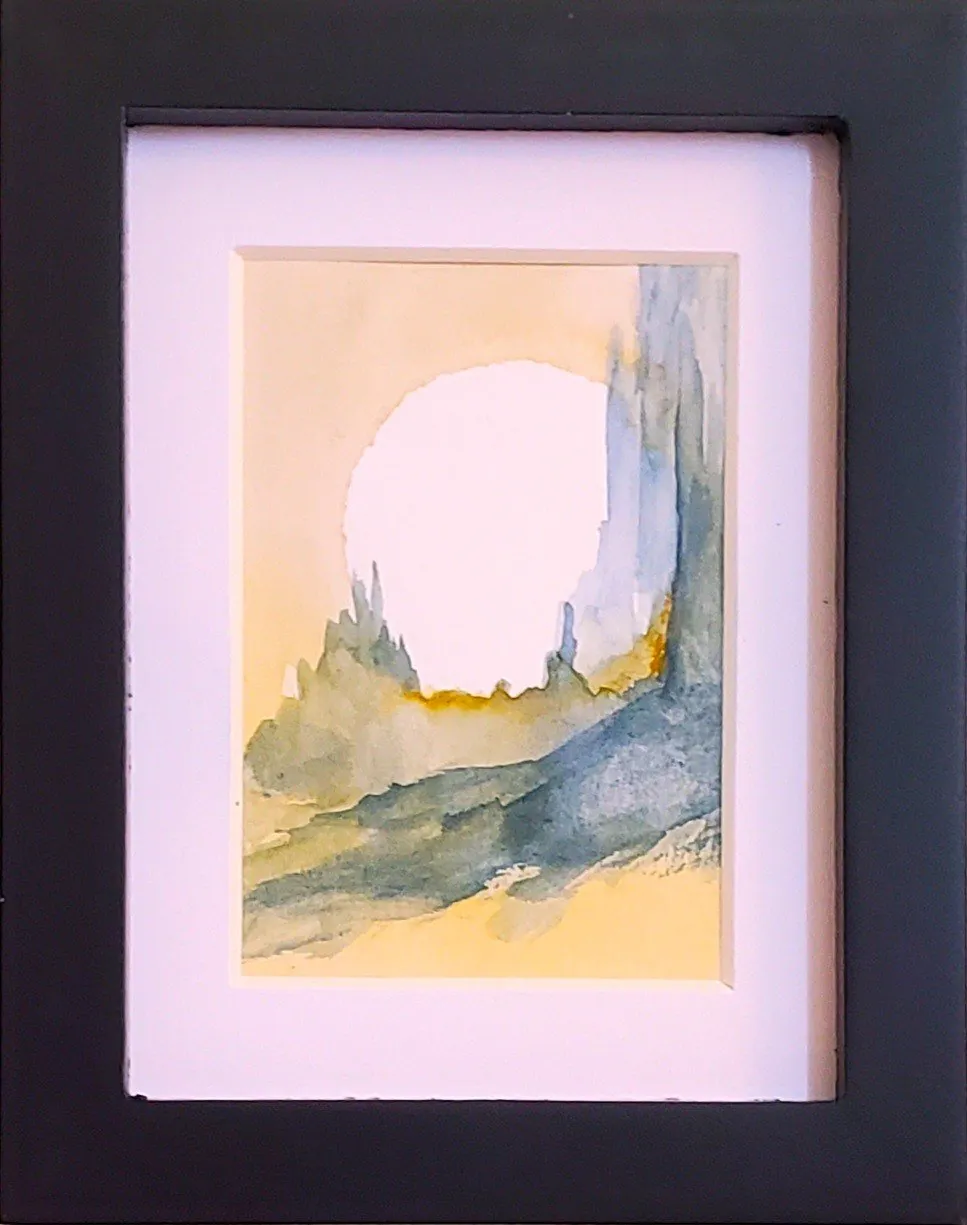
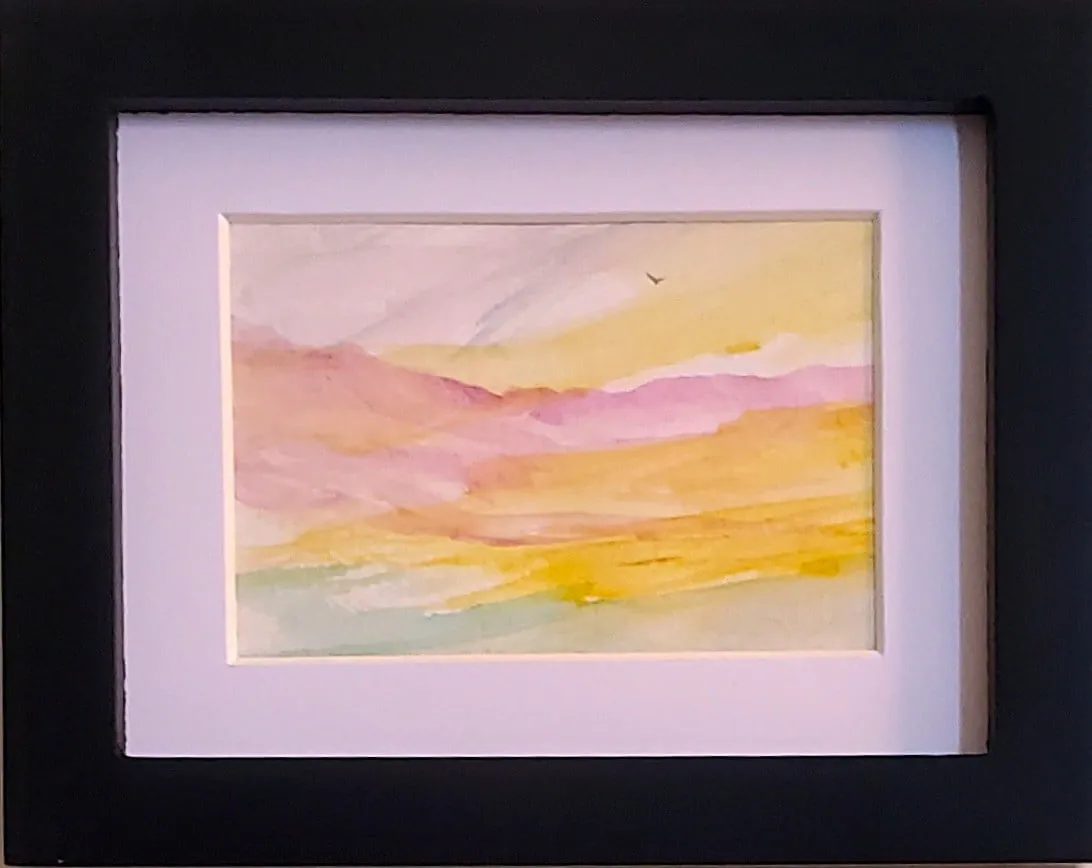
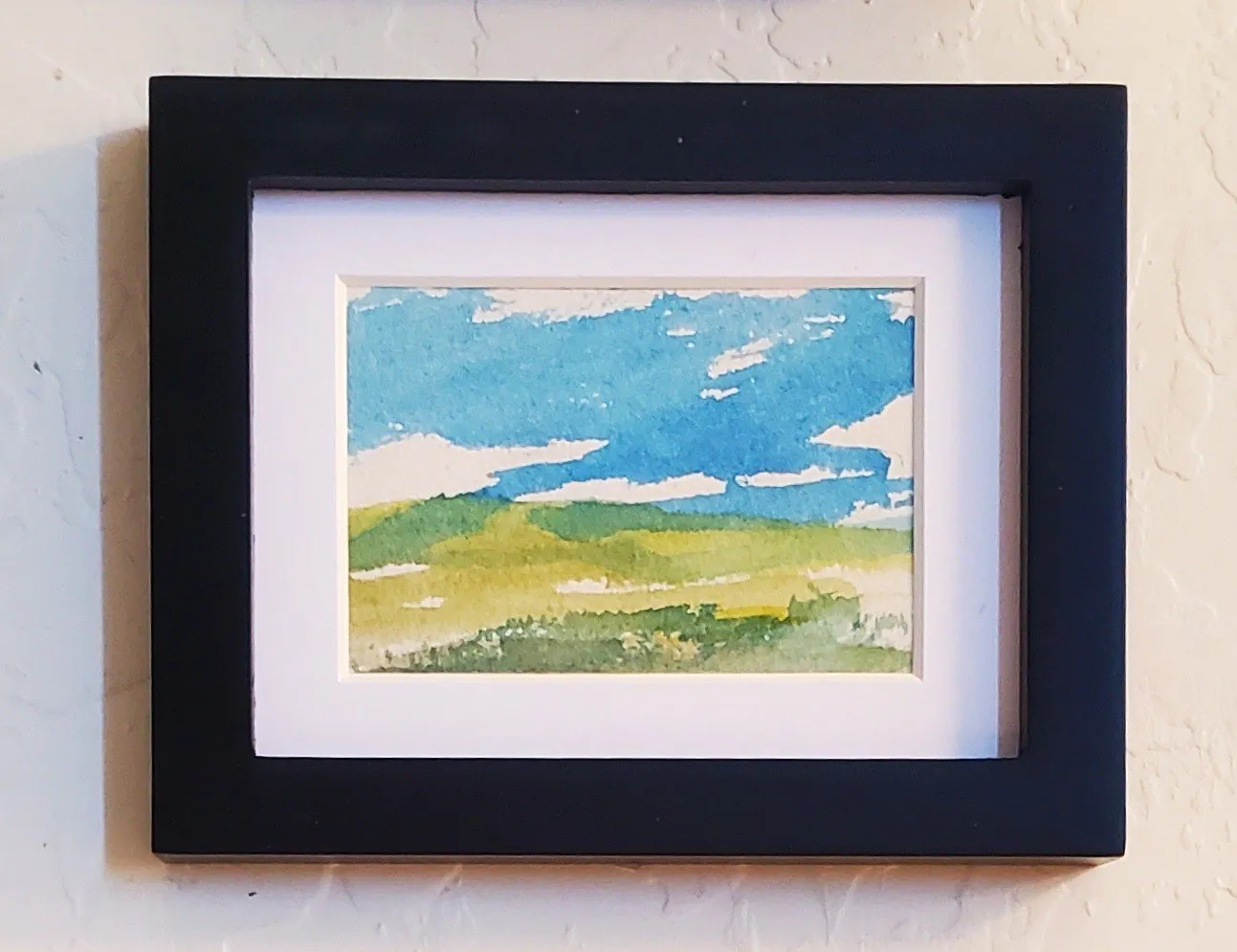
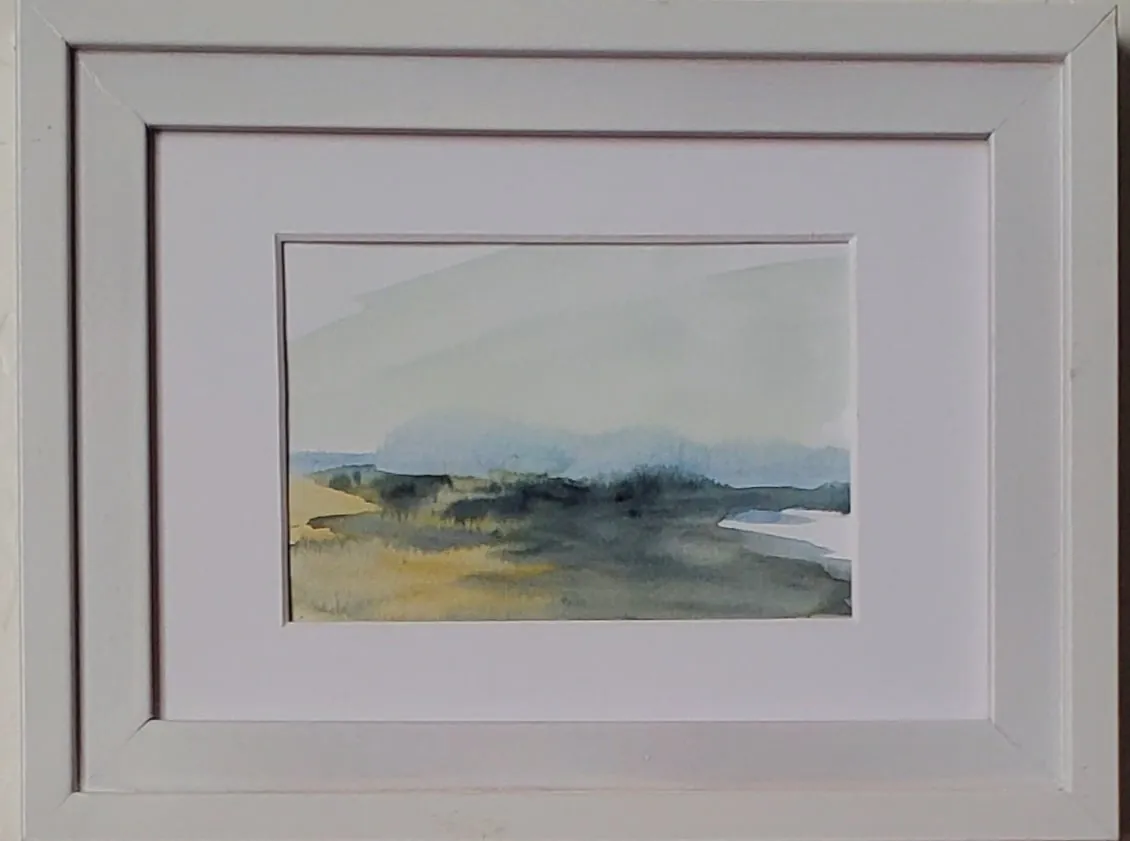
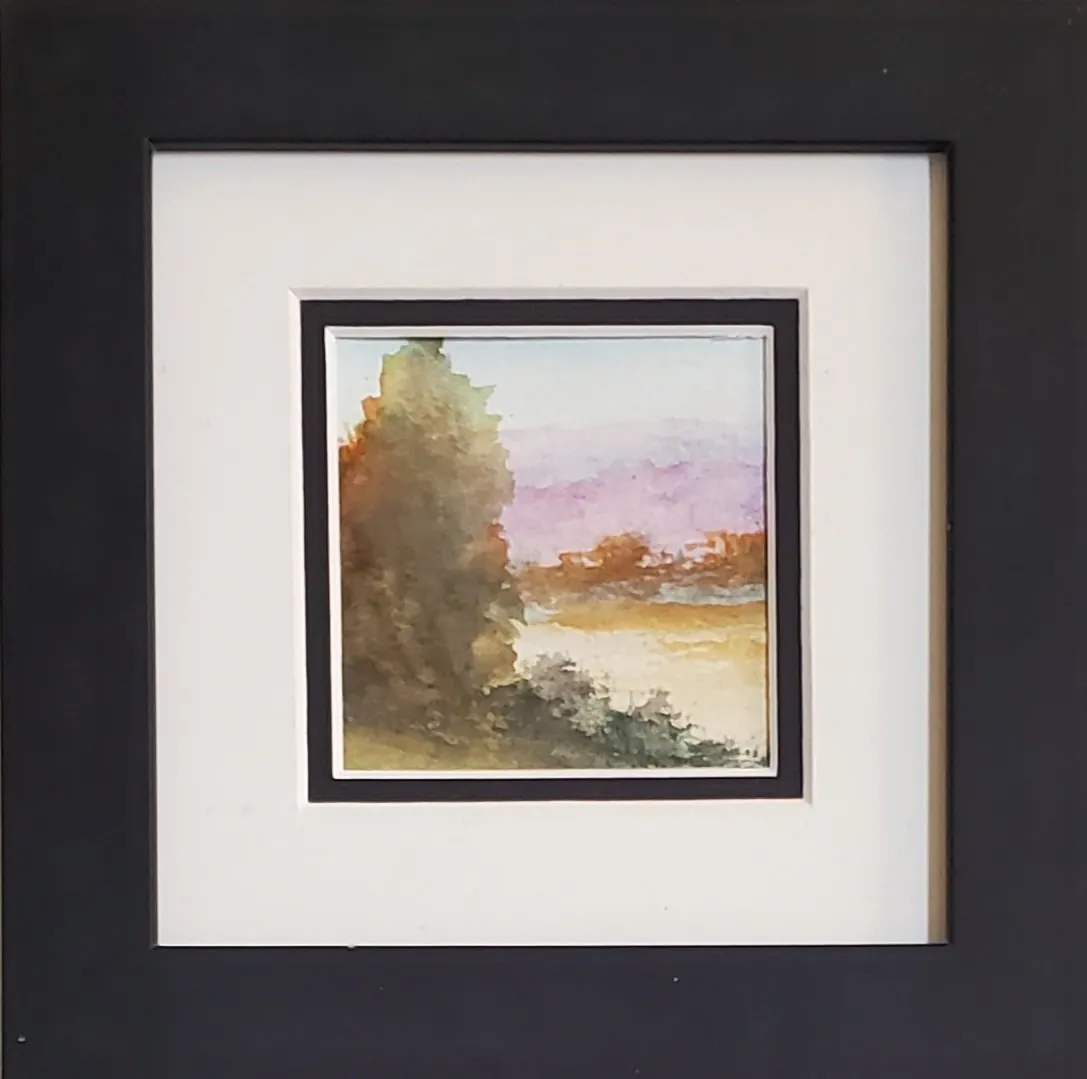
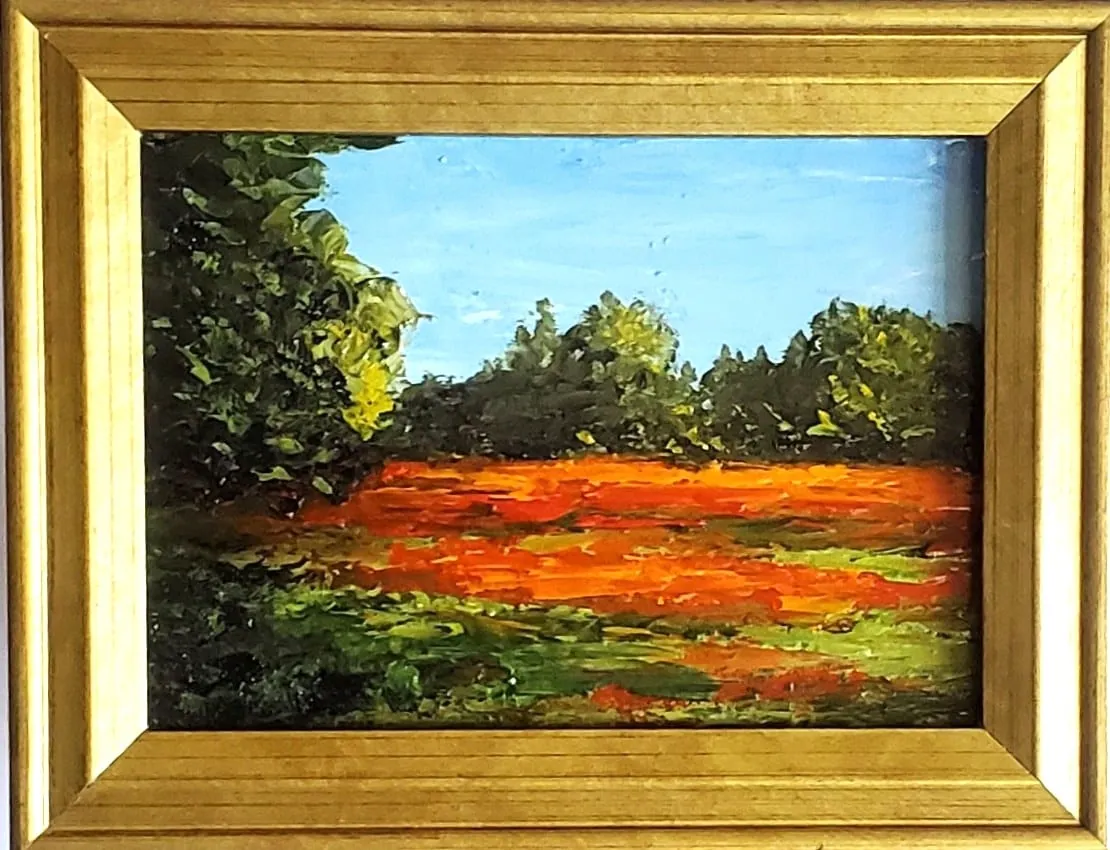
You do not need to know the exact place a painting will go before you choose it. Begin with the work that makes you stop. Perhaps it is a cool blue horizon, a quiet line of trees, a wave carrying more force than its size suggests, or a softened field at first light. The colours and feeling you are drawn to are often a better guide than matching the painting to every surface in the room.
Once a few pieces have caught your attention, look at the specific listing for the painted and finished dimensions. Many of Fred's watercolors are matted or framed, and the outer measurement is what matters when you are deciding where the work could live. Taping out that size on a wall is a simple way to understand the scale before it arrives.
Watercolor also changes gently with the light around it. A pale sky can feel cooler near a window and warmer under a reading lamp. A deep blue sea may give a desk or shelf a point of focus, while a softer landscape can make an entryway feel less hurried. You do not have to find a painting that explains the whole room. A good small original often works because it gives the room one clear note of color, weather, or memory. Over time, that small note can become the part of the room you notice first.
Because each watercolor is an original, small variations are part of the appeal. A photographed image can show the composition, but it cannot fully reproduce the slight changes in paper texture, transparent paint, and surface detail that appear when the work is in front of you. Choosing an original is less about finding a perfect match and more about recognizing the piece whose color and atmosphere feel right for the way you live.
It also helps to think about how often you will see the painting. Small original art does well in places you pass slowly or return to every day. A narrow stretch of wall, a bedside corner, a shelf at eye level, or the space beside a favourite chair can give a compact work room to settle in. The aim is not to fill a wall. It is to make a place feel more like yours.