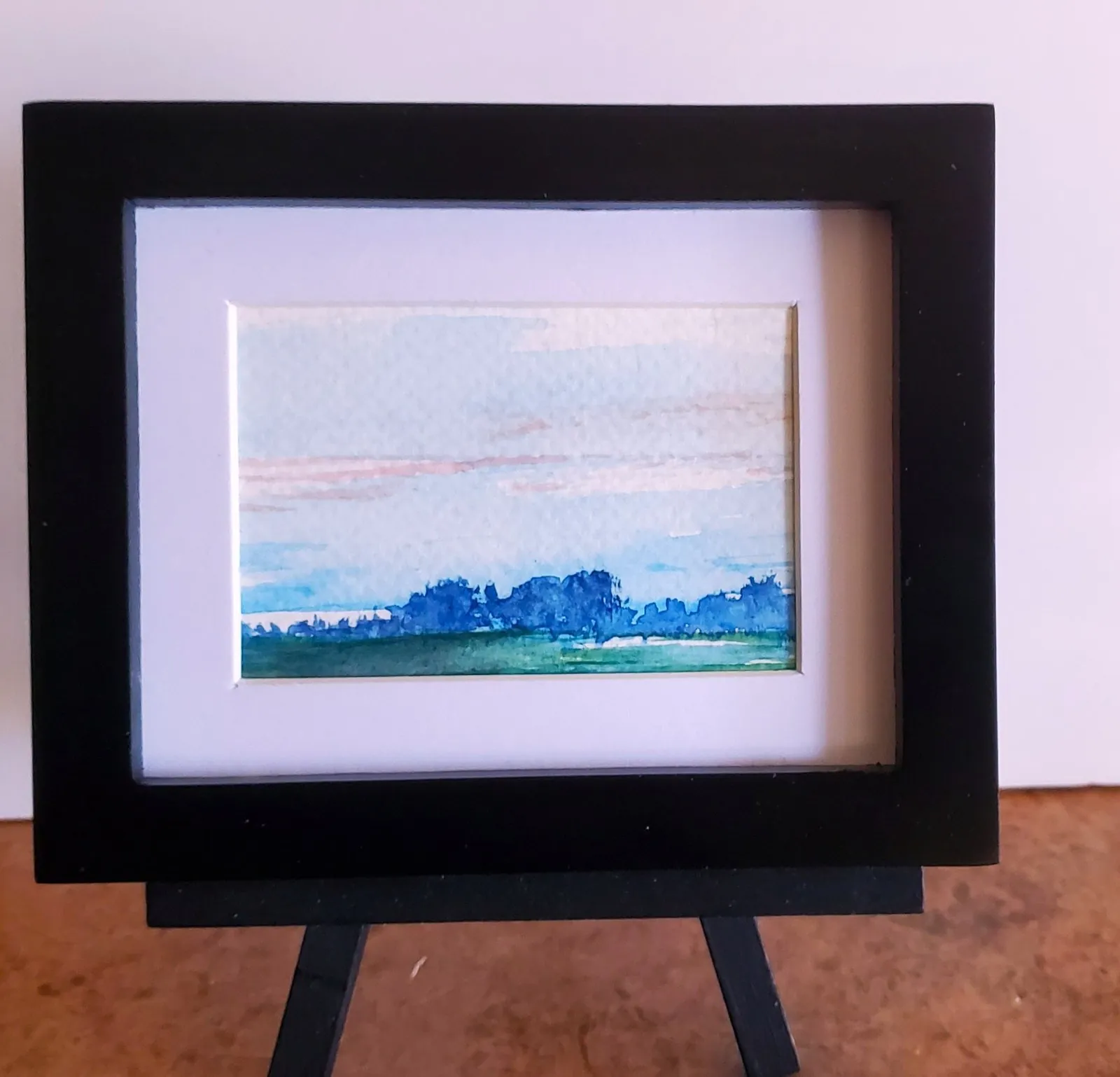
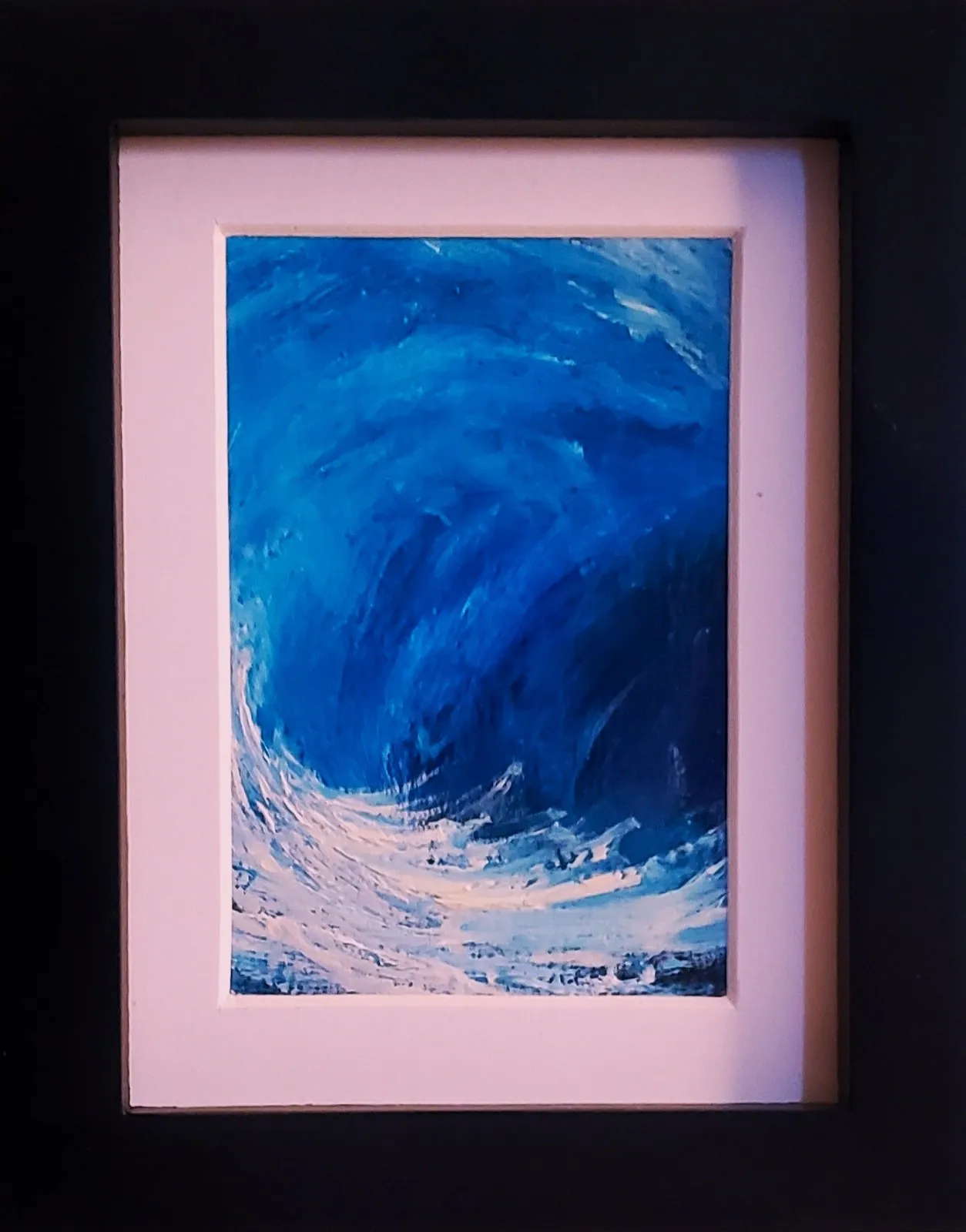
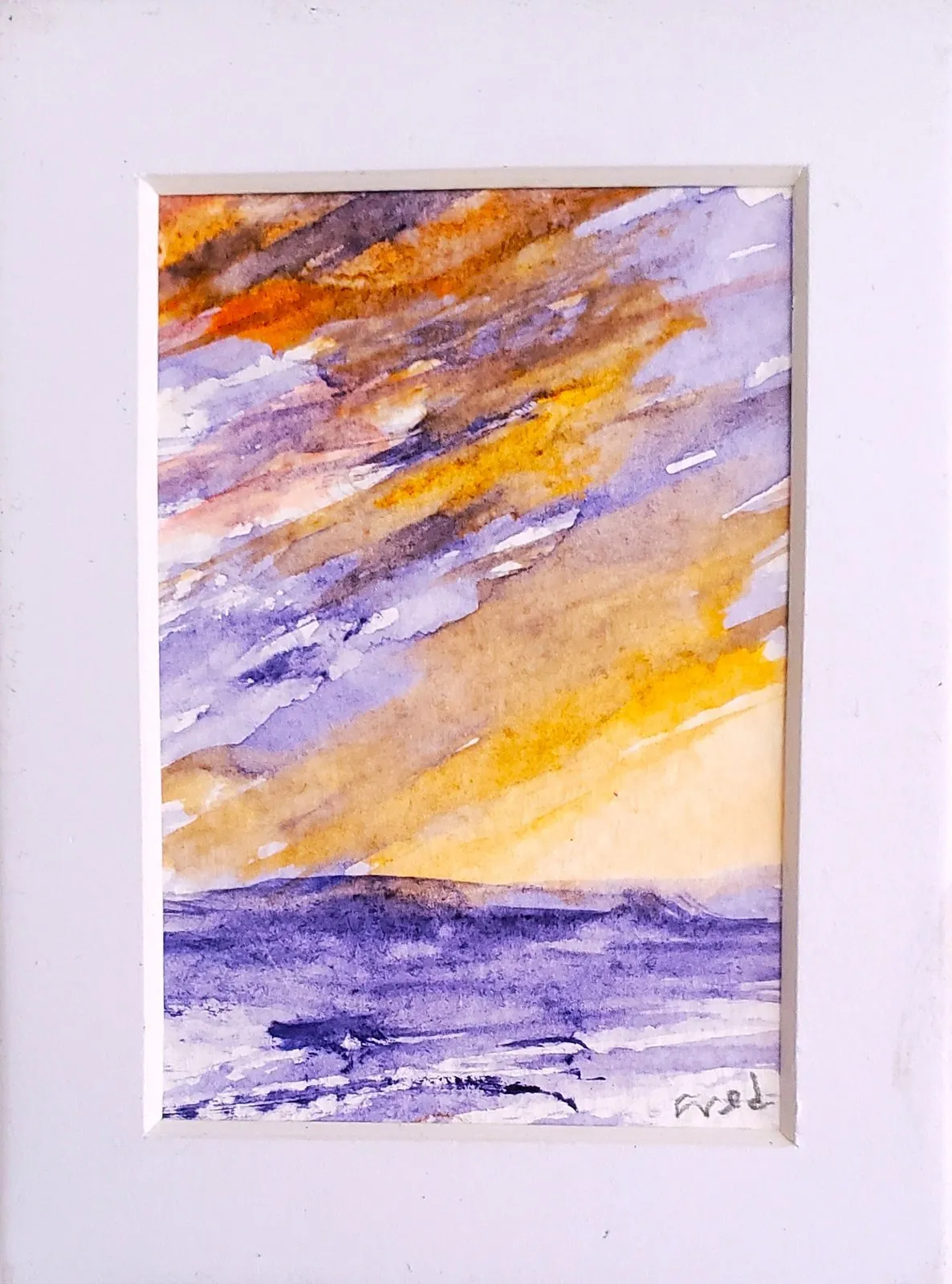
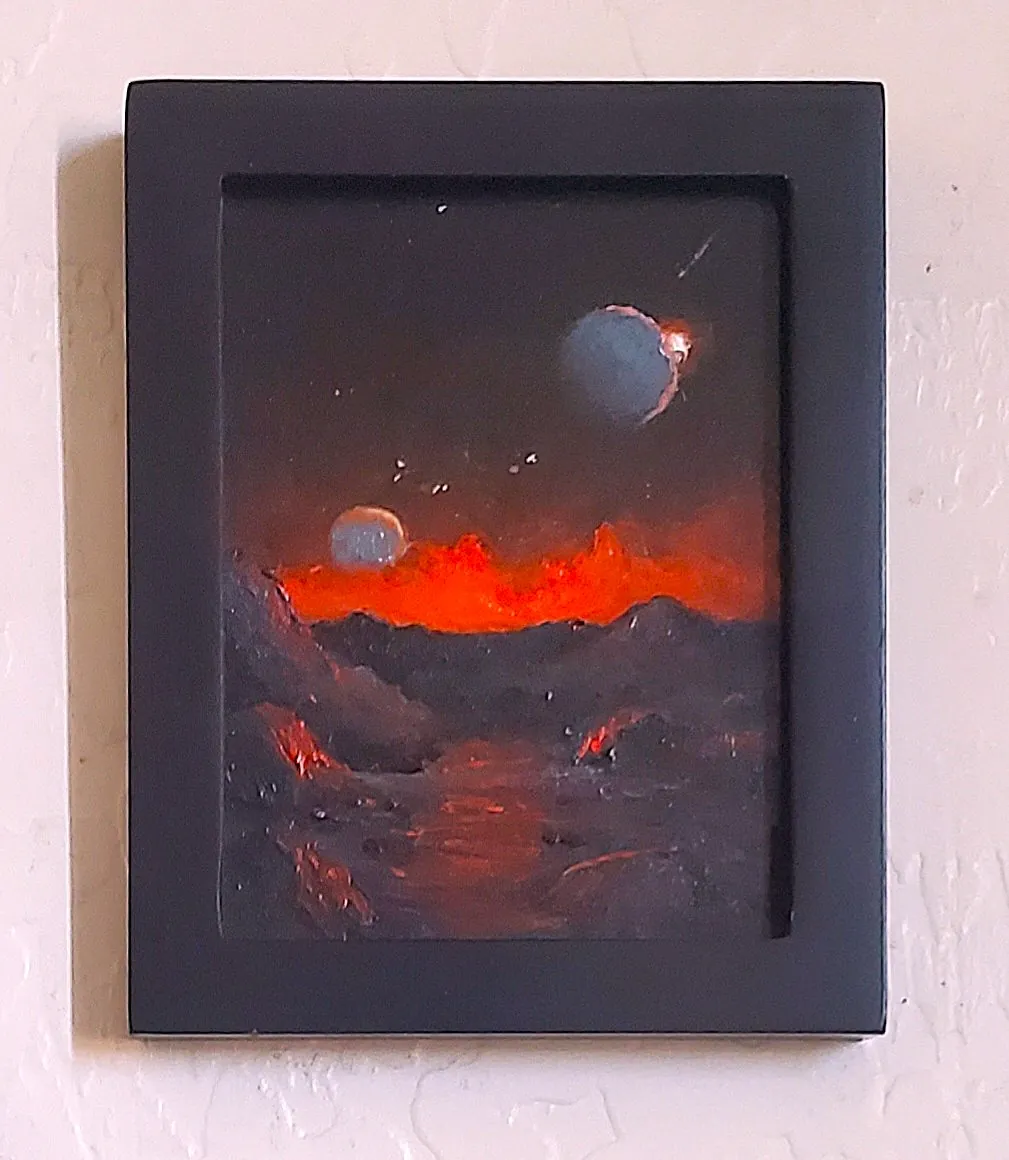
Begin with the person, then narrow the possibilities. For someone drawn to quiet mornings and open land, a small watercolor landscape can feel right. For someone who loves weather, travel, or the coast, look to a painting with water and movement. A friend who enjoys bolder color may respond to an abstract piece. Someone fascinated by astronomy may keep returning to Fred's Deep Space paintings. The aim is not to solve every decorating decision. It is to choose a work that feels like a thoughtful recognition.
Once a few paintings stand out, look at the individual artwork page. The painted dimensions and finished presentation matter, especially when a work is matted or framed. Many pieces are made at an intimate scale, while their outer framed dimensions give them a stronger presence on a wall. A quick look at those measurements makes the surprise more likely to feel ready for a real place in the recipient's home.
You can also choose by medium. Watercolor can carry transparent layers, soft edges, and a lighter sense of atmosphere. Oil may show denser color and more texture, while tempera can bring a dry, direct mark. These are not rules for what a recipient will prefer. They are useful ways to notice what kind of surface and feeling keeps drawing you back as you compare the work.
An original painting is especially meaningful when you want a gift to feel considered without being overly formal. It can mark a birthday, a new home, a retirement, a thank-you, or a moment that deserves something personal. The painting does not need a fixed occasion to matter, though. Sometimes a small hand-painted view is simply a way of saying, "I saw this and thought of you."
When you are buying for someone whose taste feels hard to predict, choose the work that has a clear point of view rather than trying to imitate their whole room. A favorite color, a remembered kind of landscape, or a subject they already enjoy is enough to begin. Original art works well as a gift because it gives the recipient room to decide where it belongs. A painting can start on a desk, move to a hallway, or become part of a future group of works as their home changes around it.