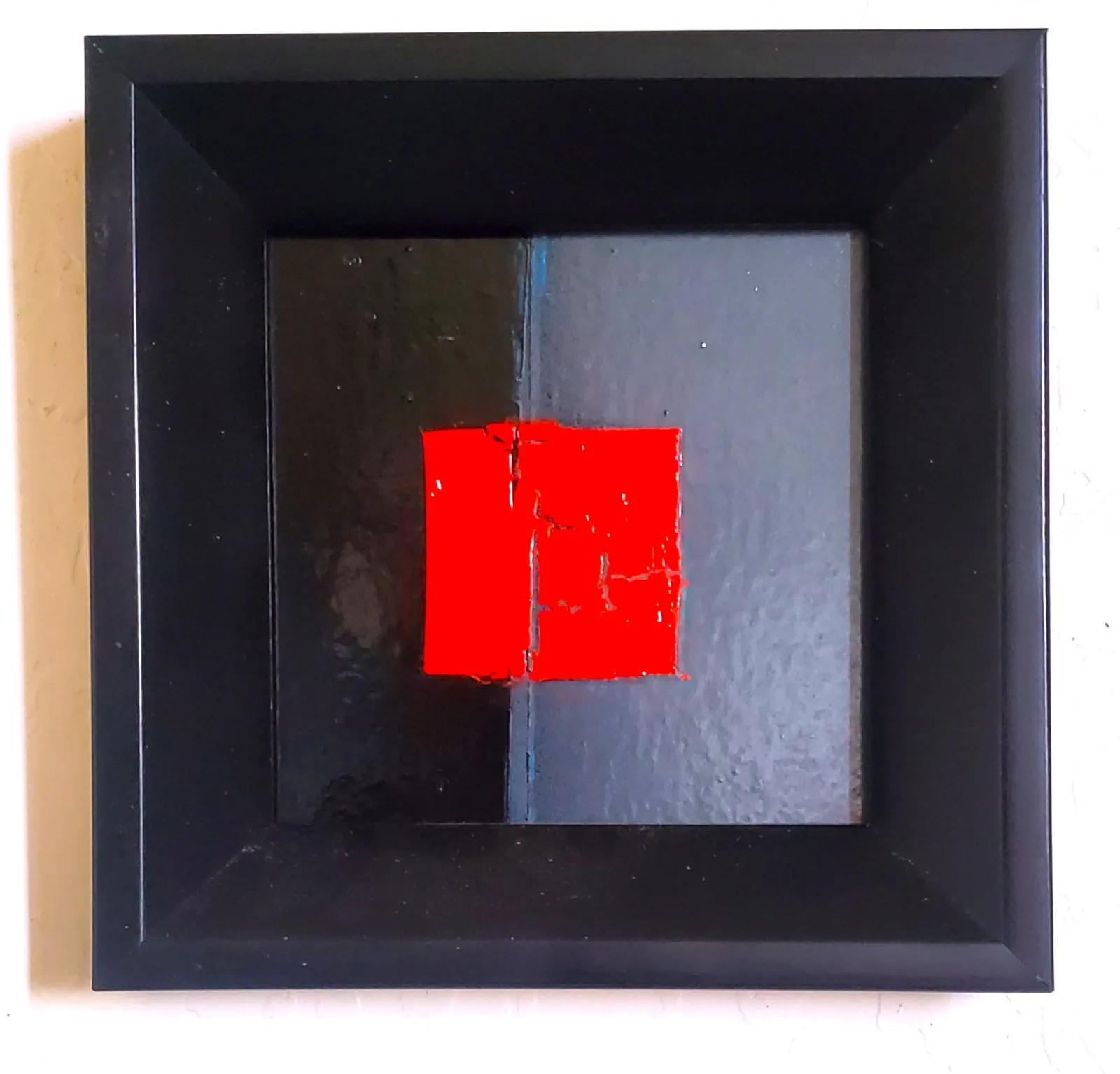
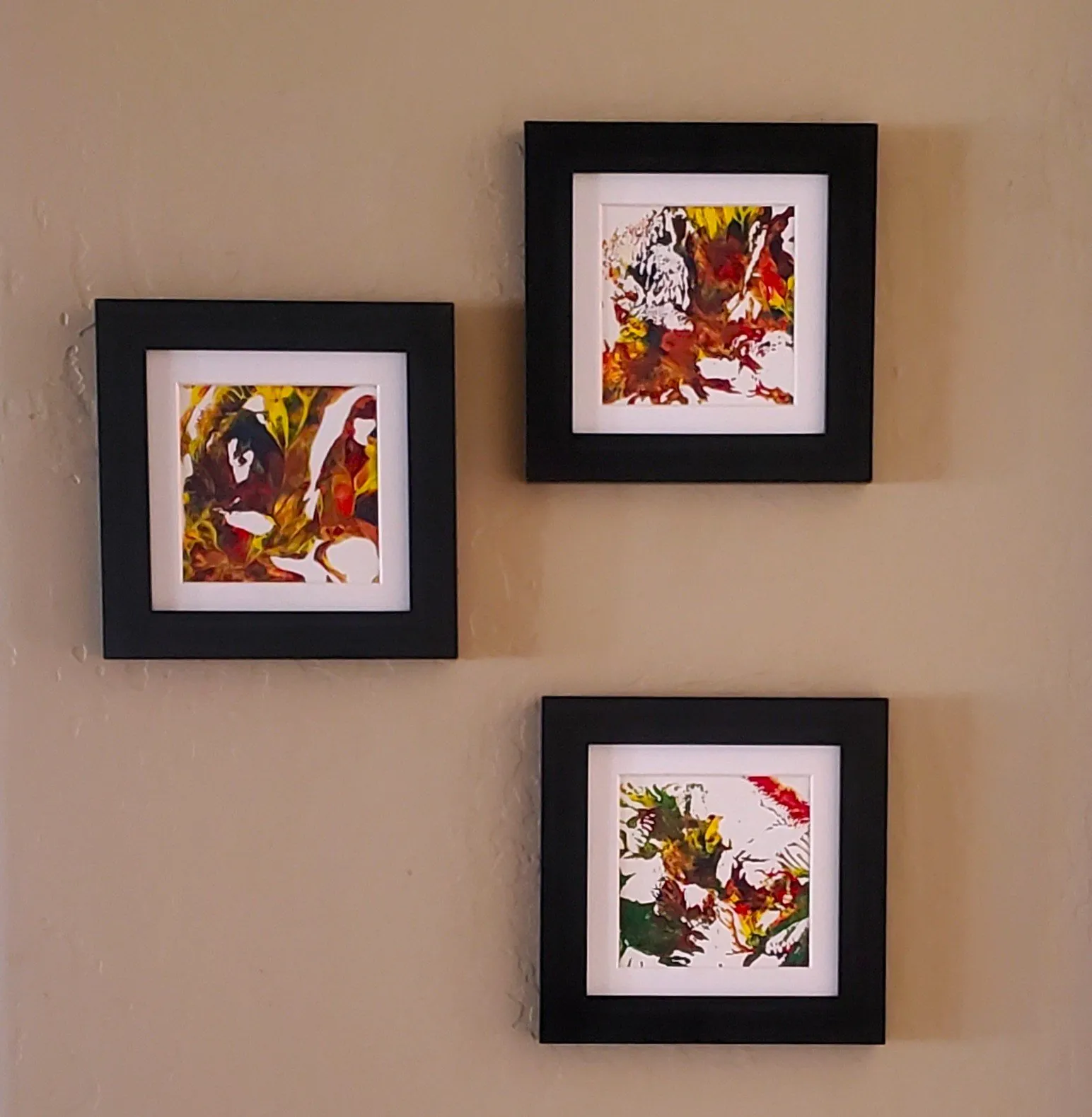
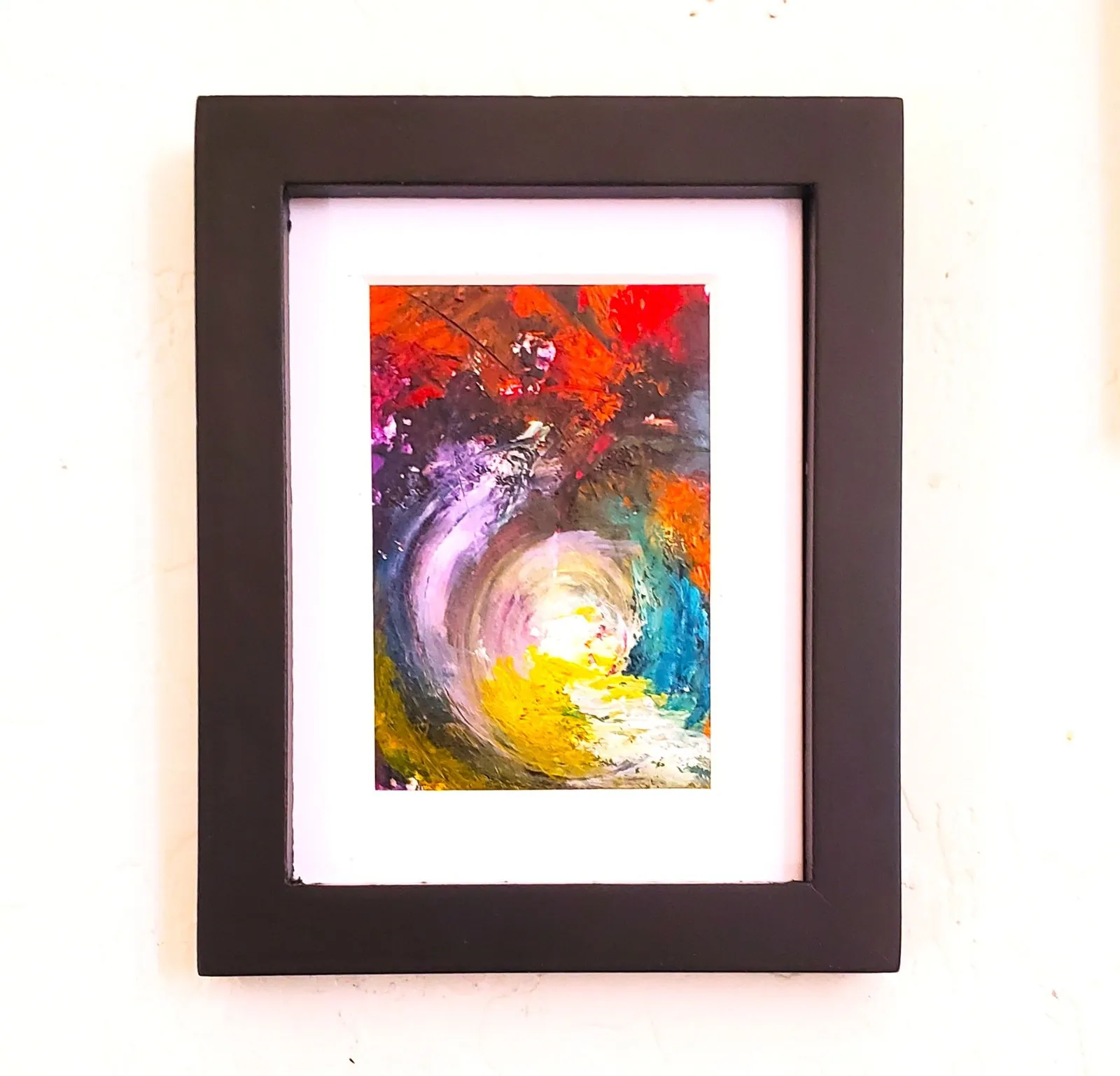
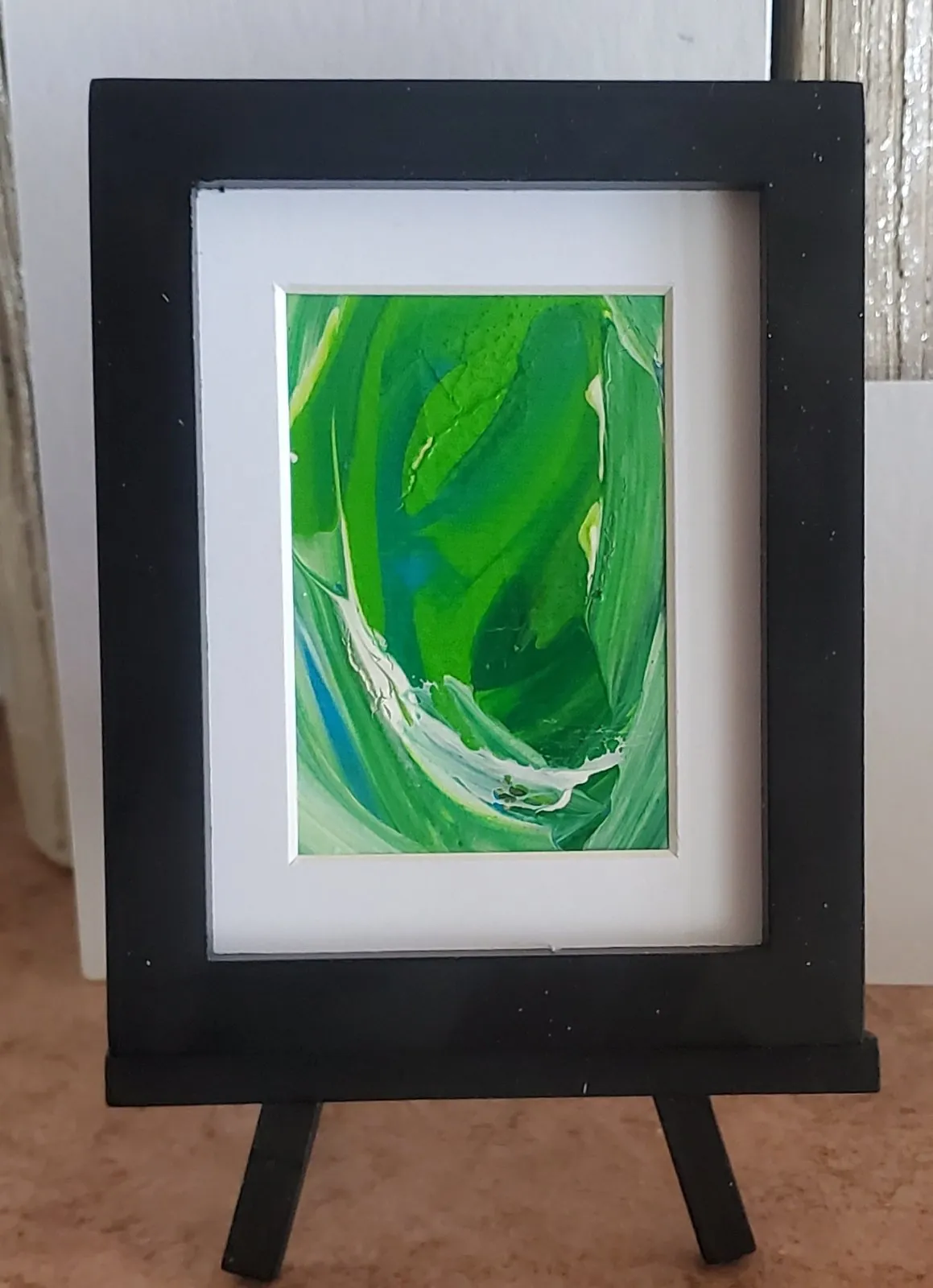
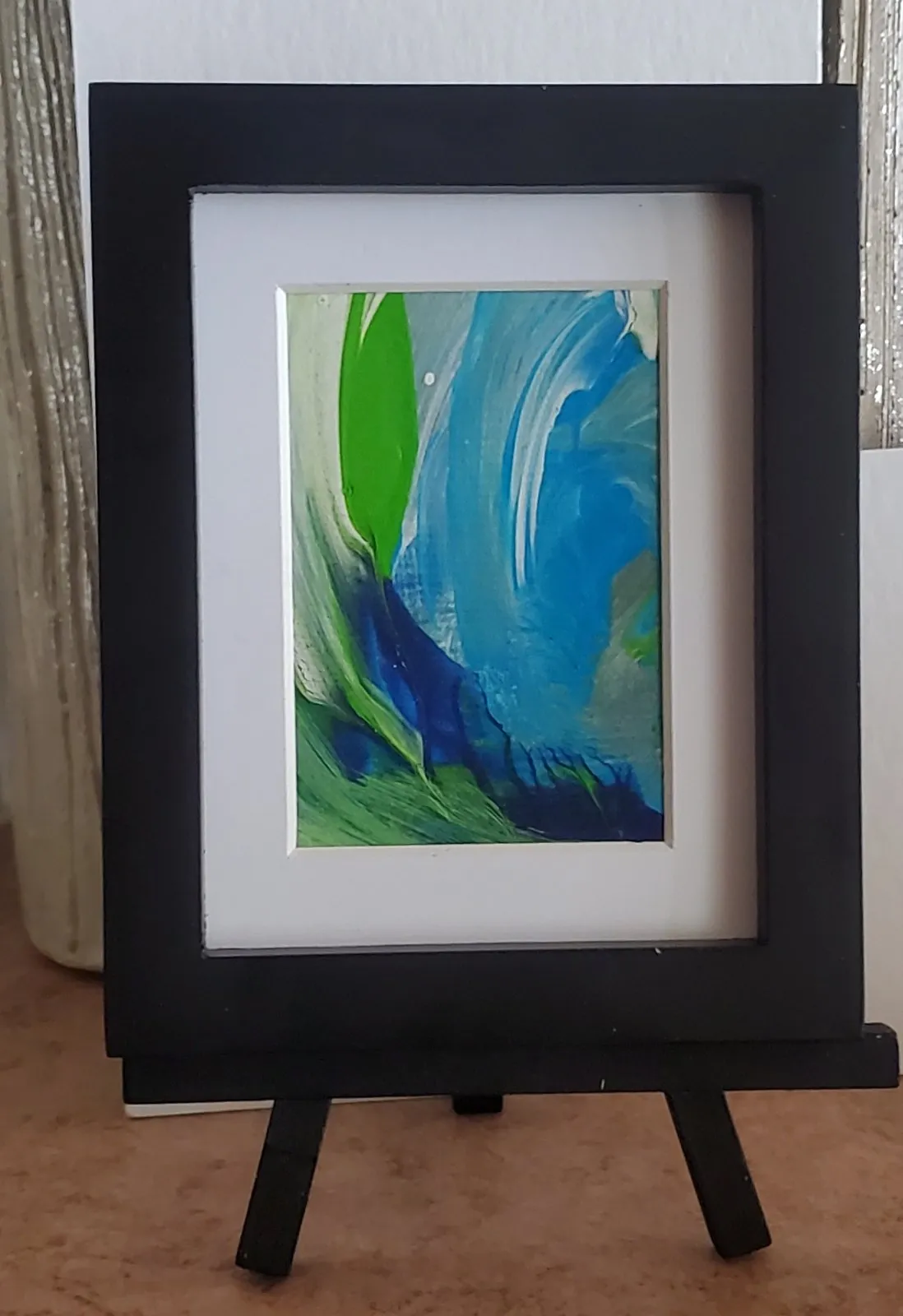
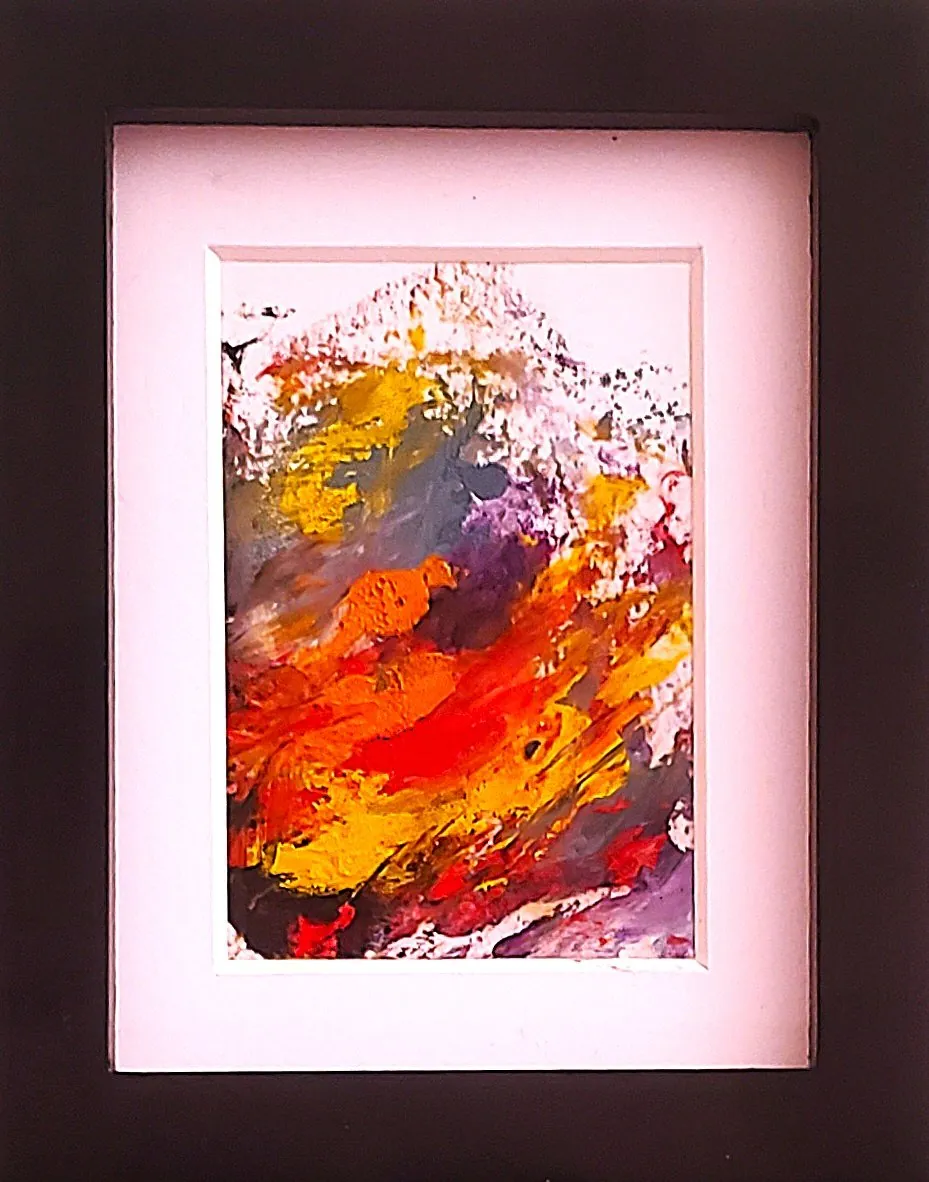
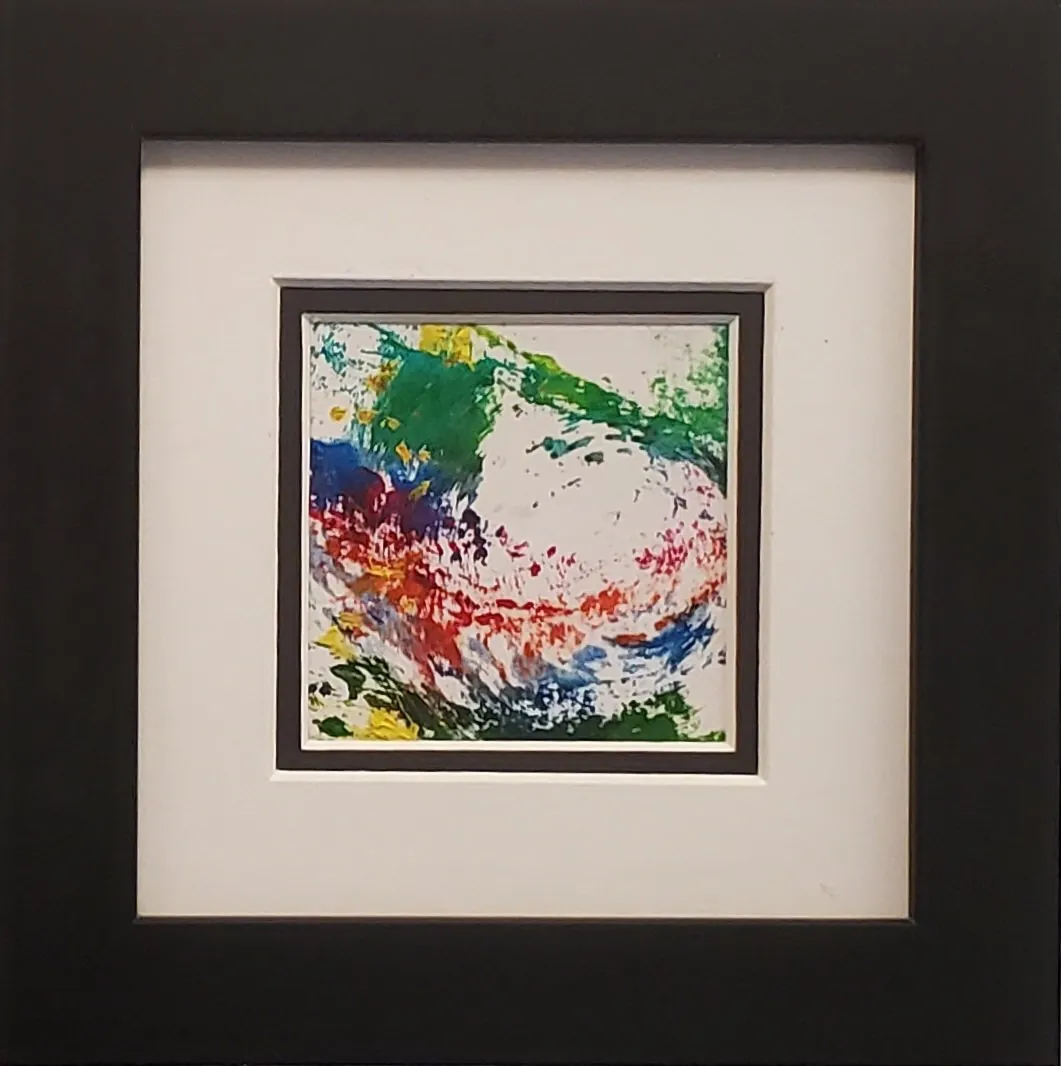
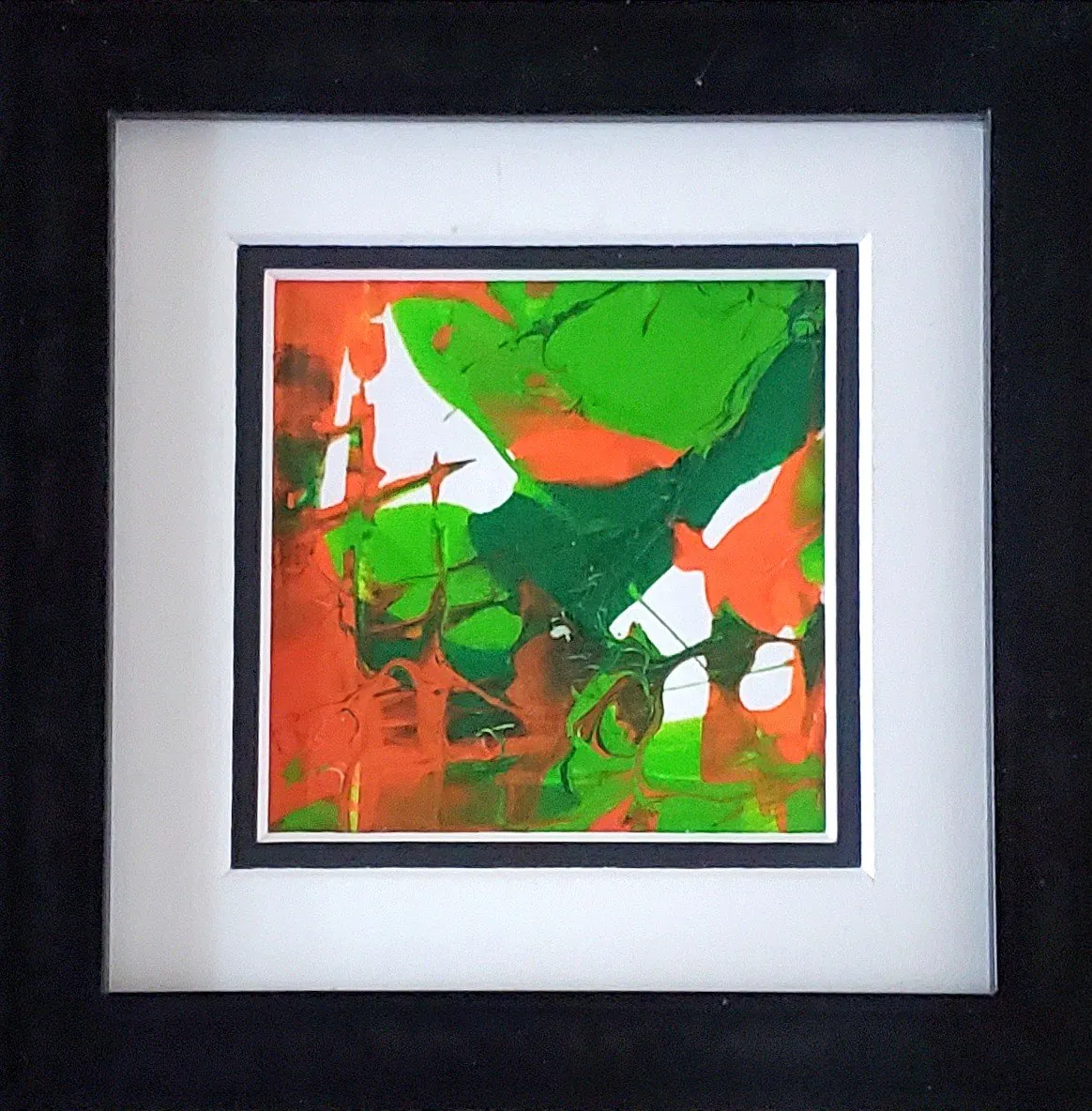
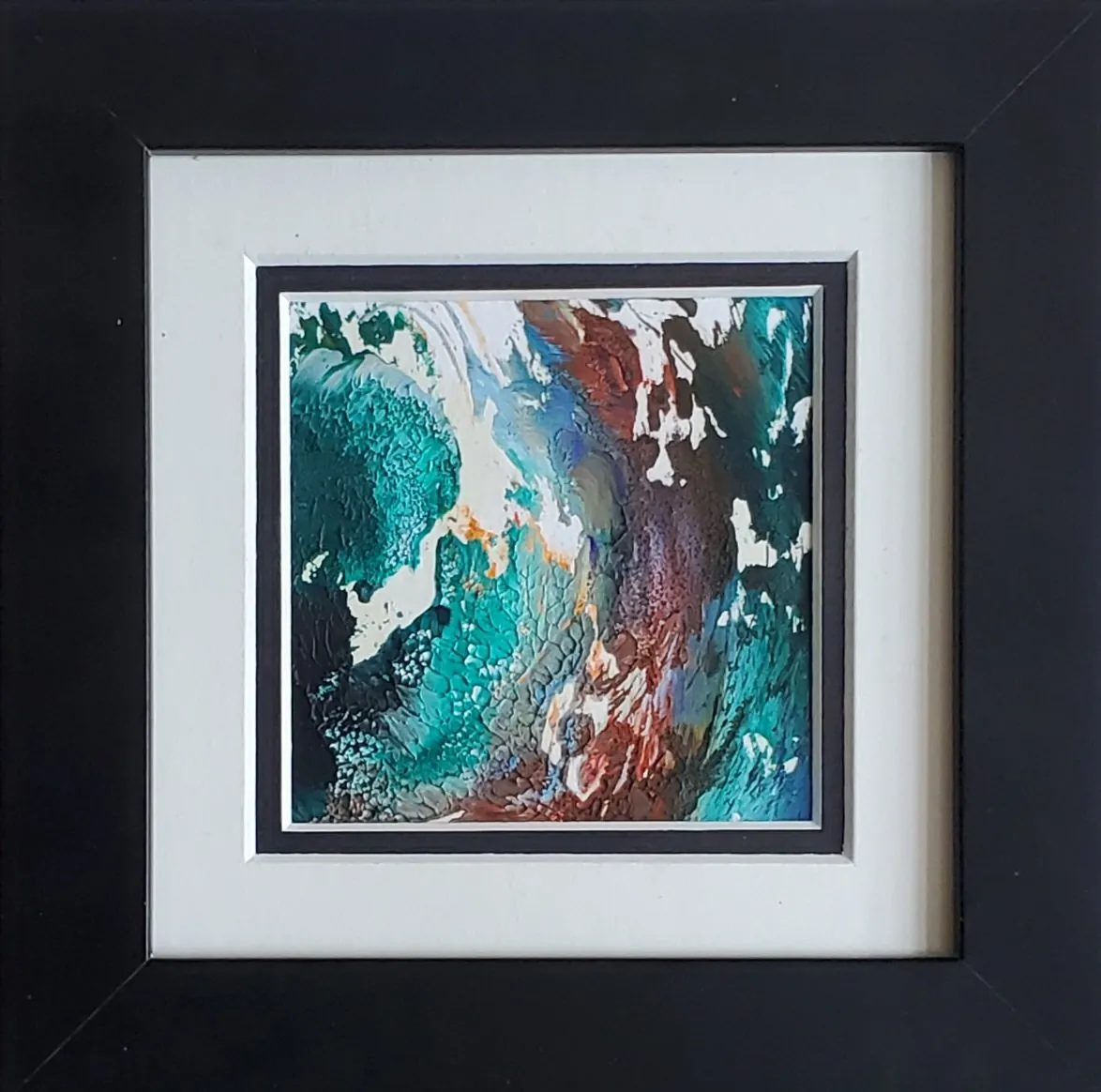
Start with a straightforward response. Perhaps a yellow spiral feels optimistic, a green field feels grounded, or a group of sharper lines gives a room the energy it has been missing. That first reaction is more useful than trying to solve the painting. Abstract art can work because it makes space for a mood rather than delivering a literal view.
Then think about the place where you will see it most often. Small originals are especially good in the parts of a home where close looking already happens: beside a favorite chair, over a desk, in an entry, on a narrow wall, or among books and photographs. Use the finished dimensions from the individual listing, rather than the painting size alone, when you have a particular spot in mind. A mat and frame can give a compact painting a much larger presence.
Light matters, too. A bright work can feel different beside a window than it does under a lamp, while texture in oil or tempera may become more visible as the day changes. If you are choosing between two paintings, imagine each one at the time of day when you use that room most. The right piece often has a way of making the decision feel simpler.
Abstracts also pair well with representational art. A coastal painting and a small abstract can share a wall when they answer each other through color or atmosphere. An abstract can offer a pause between landscapes, or bring a more active note into a calmer group. There is no need to build a finished collection at once. A small original gives you a meaningful starting point and leaves room for the next connection to reveal itself later.